
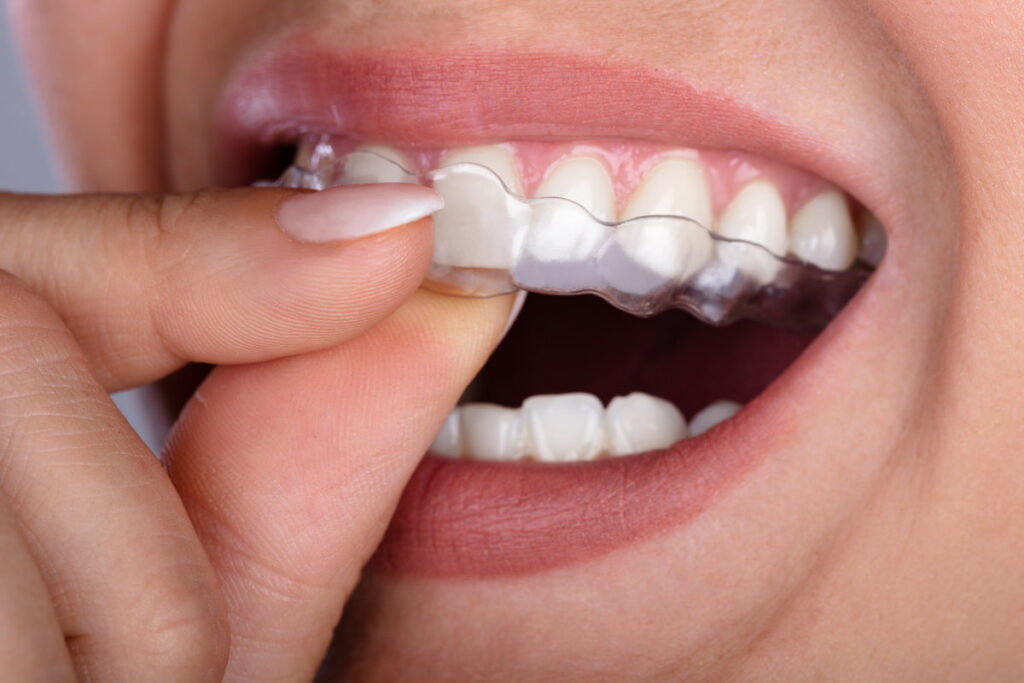
You committed to the process. You are wearing your trays consistently, switching on schedule, and checking in as directed. That dedication matters, and it is doing real work toward the smile you are working for. But here is the part that sometimes gets glossed over in the initial excitement: how you care for your aligners between wears makes a meaningful difference in both the success of your treatment and the health of your teeth along the way. The good news is that proper aligner maintenance is genuinely straightforward once you know what to do and, just as importantly, what to avoid.
At Newport Beach Dental Center, we want our clear aligner patients to feel confident not just about their treatment plan, but about the day-to-day habits that support it. Whether you are just getting started or a few trays in, this guide covers everything you need to keep your aligners clean, clear, and working the way they should. Our clear aligners page covers the full scope of what treatment looks like from start to finish if you are still weighing your options.
Why Aligner Care Matters More Than You Might Think
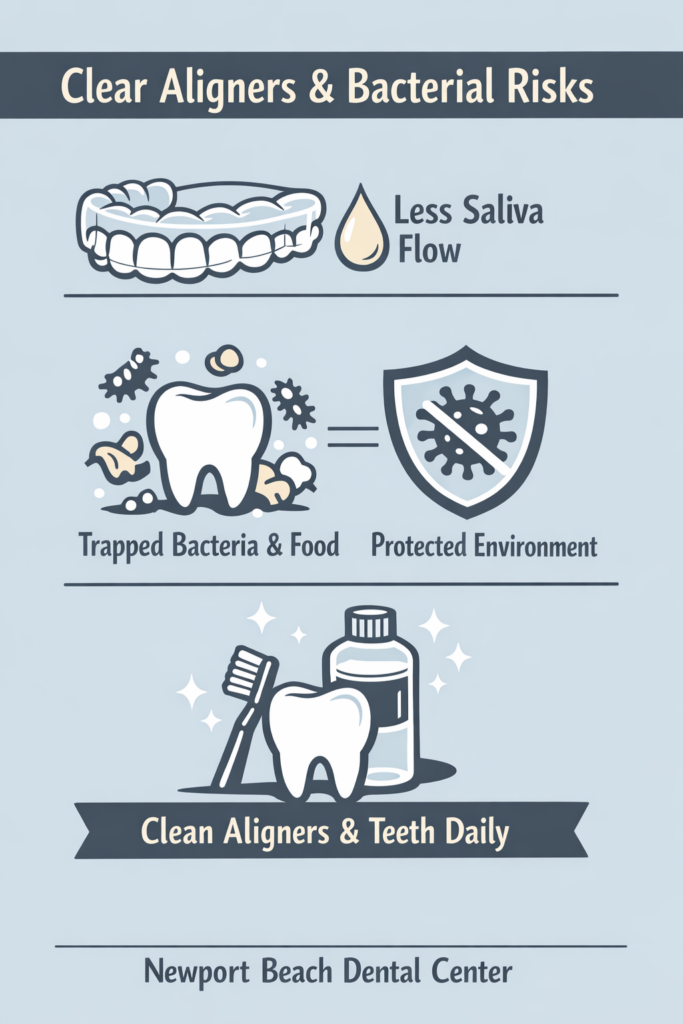
Clear aligners do not just sit passively on your teeth. Because they fit snugly over the entire tooth surface, they also limit how much saliva reaches your enamel throughout the day. Research published by the American Dental Association notes that aligners significantly reduce saliva’s natural ability to rinse away microorganisms and protect against microbial pathogens. That means bacteria and food debris left on either your teeth or your trays have a more protected environment to work in, which raises the stakes for consistent cleaning.
This is not a reason to worry. It is a reason to be intentional. A few minutes of care each day keeps the bacterial environment in check and protects both your aligners and your enamel throughout treatment.
How to Clean Your Aligners Properly
Cleaning your aligners does not require a complicated routine, but it does require consistency.
Daily Rinsing and Brushing
The most reliable approach is rinsing your aligners with lukewarm water every time you remove them, followed by a gentle brushing with a soft-bristled toothbrush and a small amount of clear, unscented soap. Avoid toothpaste for this step, most formulas contain abrasive particles that scratch the tray surface over time, creating grooves where bacteria accumulate. A clear antibacterial soap or an aligner-specific cleaning product will do the job without the wear.
Soaking
A daily soak in a diluted solution of equal parts water and hydrogen peroxide, or a dedicated aligner cleaning tablet, helps maintain tray clarity and freshness. Avoid mouthwash with artificial dyes, as these can tint the plastic and undermine the subtle appearance that makes aligners appealing in the first place.
What Not to Do With Your Aligners
A few habits are responsible for most preventable aligner damage, and knowing them upfront saves real trouble down the line. The following are the ones worth keeping top of mind:
- Never rinse or soak aligners in hot water, which warps the plastic and disrupts how the tray fits against your teeth.
- Do not eat or drink anything other than plain water while wearing your trays, as food and acidic beverages trapped beneath the plastic accelerate staining and decay.
- Avoid leaving aligners out uncovered, which increases bacterial contamination while they are not in use.
- Skip colored or scented soaps, which leave residue and odor inside the tray.
Staying consistent with these four points eliminates the most common sources of tray damage throughout treatment.
Caring for Your Teeth While in Treatment
Before putting your trays back in after eating or drinking, brush and floss thoroughly. Placing aligners over teeth that have not been cleaned traps bacteria and food against the enamel for hours, significantly raising the risk of cavities and white spot lesions. Staying current with general dentistry visits during treatment is also essential, as professional cleanings address buildup in areas that are harder to reach during active aligner use.
If you experience dry mouth during treatment, staying hydrated and asking us about fluoride treatments as a protective measure is worth a conversation.
How ProMonitoring Supports Your Treatment
One of the advantages of our clear aligner program is the integration of ProMonitoring, an FDA-cleared, AI-driven remote monitoring platform that allows Dr. Sharbash to track your progress at every aligner change. Through ProMonitoring’s patient engagement features, including messaging and notification tools, you stay connected to your care team between appointments. That means potential fit or progress issues can be identified and addressed early rather than waiting until your next scheduled visit.
You can learn more about how this technology works on our ProMonitoring page.
Get the Most Out of Your Treatment at Newport Beach Dental Center
Your clear aligner treatment is a real investment in your smile, and small daily habits protect that investment at every step. Dr. Laura Sharbash, DDS, FAGD, D.ABDSM, and our team are here to support you through every tray change, and we welcome questions at any point throughout your treatment.
If you have concerns about your aligner fit, your oral health during treatment, or anything else along the way, do not wait to reach out. Request an appointment online and our team will be happy to connect with you.