
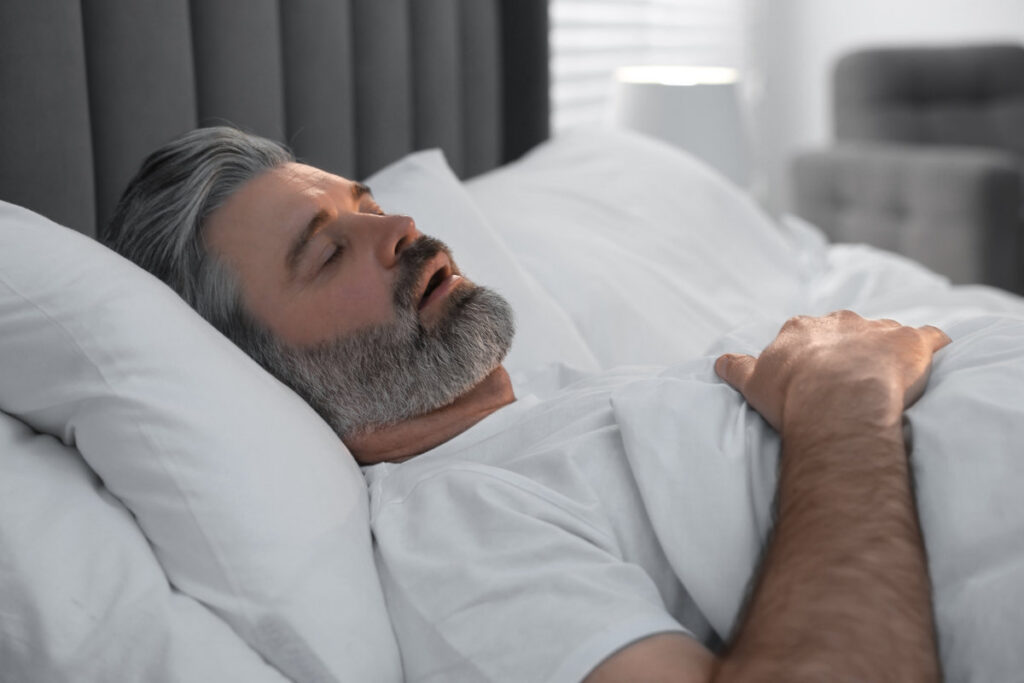
Waking up exhausted despite a full night’s sleep, snoring loudly enough to wake a partner, or gasping for air in the middle of the night are symptoms that are easy to brush off as minor inconveniences. Many people do exactly that, chalking it up to stress or a long week, and carrying on without seeking answers. But Obstructive Sleep Apnea/OSA is a condition that quietly compounds over time, and the longer its symptoms go unaddressed, the more serious the consequences can become.
At Newport Beach Dental Center, Dr. Laura Sharbash, DDS, FAGD, D.ABDSM, is board-certified in dental sleep medicine and has built a focused approach to helping patients identify and manage OSA through proven dental solutions. Our OSA treatment options are designed to be comfortable, effective, and tailored to each patient’s needs so that restful, restorative sleep is no longer out of reach.
Risk 1: Cardiovascular Complications
The connection between OSA and heart health is one of the most well-documented in sleep medicine research. When breathing repeatedly stops during sleep, oxygen levels in the blood drop, causing the heart to work harder to compensate. Over time, this repeated strain raises blood pressure and increases the risk of conditions like atrial fibrillation, heart attack, and stroke. Research published through the National Heart, Lung, and Blood Institute confirms that untreated OSA is associated with a significantly elevated risk of cardiovascular disease.
Cardiovascular risk is not something that develops overnight, which is why many people don’t connect their fatigue and snoring to a heart health issue. Understanding how OSA affects your overall health is an important first step toward taking the condition seriously before those risks have time to escalate.
Risk 2: Cognitive Decline and Mental Health Impacts
Sleep is not a passive process. It is the time the brain uses to consolidate memories, clear metabolic waste, and regulate emotional responses. When OSA fragments sleep night after night, the brain simply doesn’t get the deep, restorative rest it needs. The result can show up as difficulty concentrating, memory problems, irritability, and over time, an increased vulnerability to anxiety and depression.
The cognitive effects of chronic OSA can easily be mistaken for aging or everyday stress, which is precisely why so many cases go undiagnosed for years. Learning more about what Obstructive Sleep Apnea is and how it disrupts the brain’s natural processes can help patients connect the dots between their symptoms and a treatable underlying cause.
Risk 3: Metabolic and Hormonal Disruption
OSA does not just affect the heart and brain. It also interferes with the body’s hormonal and metabolic systems in ways that can be difficult to recognize. Disrupted sleep is associated with insulin resistance, weight gain, and difficulty managing blood sugar, which means untreated OSA can both worsen and increase the risk of Type 2 diabetes. Hormonal disruption from poor sleep can also affect appetite-regulating hormones, making it harder to maintain a healthy weight even with diet and exercise efforts.
This creates a cycle that can be frustrating and confusing for patients who are working to manage their metabolic health without realizing their sleep is undermining those efforts. Addressing OSA at its source is often a meaningful piece of the puzzle for people dealing with unexplained weight changes or blood sugar irregularities.
Risk 4: Dental and Oral Health Consequences
What many patients don’t realize is OSA has direct consequences for oral health as well. Mouth breathing, which is common in people with OSA, leads to chronic dry mouth, which in turn raises the risk of tooth decay and gum disease. OSA is also closely linked to bruxism, or nighttime teeth grinding, which wears down enamel, causes jaw pain, and can fracture teeth over time. These are issues Dr. Sharbash monitors closely during dental visits as part of our general dentistry care.
There is a reason dentists are often the first to identify signs of OSA. Changes in the mouth, from worn teeth to inflamed gums to jaw discomfort, can serve as early warning signals. When those signs are caught and addressed early, patients have access to solutions like oral appliance therapy, which we provide at our practice. Oral appliances gently reposition the jaw to keep the airway open during sleep, and you can read more about the benefits of oral appliance therapy on our site.
Take the Next Step at Newport Beach Dental Center
Obstructive Sleep Apnea/OSA is treatable, and the earlier it is addressed, the better the long-term outcomes for your health, your sleep, and your quality of life. Dr. Laura Sharbash, DDS, FAGD, D.ABDSM brings a depth of expertise in dental sleep medicine that allows us to offer meaningful, non-invasive solutions to patients struggling with OSA in Newport Beach and the surrounding communities.If any of the risks outlined here feel familiar, we encourage you to take the next step. Reach out to our team through our contact form to schedule a consultation with Dr. Sharbash. You deserve sleep that actually restores you, and we are here to help make that happen.