
If you’ve been told you need a sinus lift before getting a dental implant, you’re not alone — and you’re also not facing anything unusual. It’s one of the more common preparatory procedures in implant dentistry, particularly for patients who are missing upper back teeth and have been missing them for a while. The name sounds more complicated than the reality, and understanding what it actually involves tends to make the whole thing feel much more manageable.
At Newport Beach Dental Center, Dr. Laura Sharbash, DDS, FAGD, D.ABDSM, takes a thorough, patient-centered approach to implant planning, which means evaluating each case carefully before recommending any preparatory procedures. If a sinus lift is part of your treatment plan, it’s there to give your dental implants the best possible foundation for long-term success.
Why the Upper Back Jaw Loses Bone
When an upper molar or premolar is lost, the jawbone in that area no longer has a tooth root stimulating it. Without that stimulation, the bone gradually resorbs, meaning it shrinks in volume over time. At the same time, the maxillary sinus, which sits just above the upper back teeth, tends to expand downward as the surrounding bone diminishes. According to the National Institute of Dental and Craniofacial Research, seniors 65 and older average just 21 remaining teeth, and many of those missing teeth are in the upper posterior region where this combination of bone loss and sinus expansion is most pronounced.
The result is a smaller window of bone between the sinus floor and the gumline, sometimes only a few millimeters. Placing an implant in that space without adequate bone depth risks piercing the sinus membrane or placing the implant without the support it needs to integrate properly.
What a Sinus Lift Does
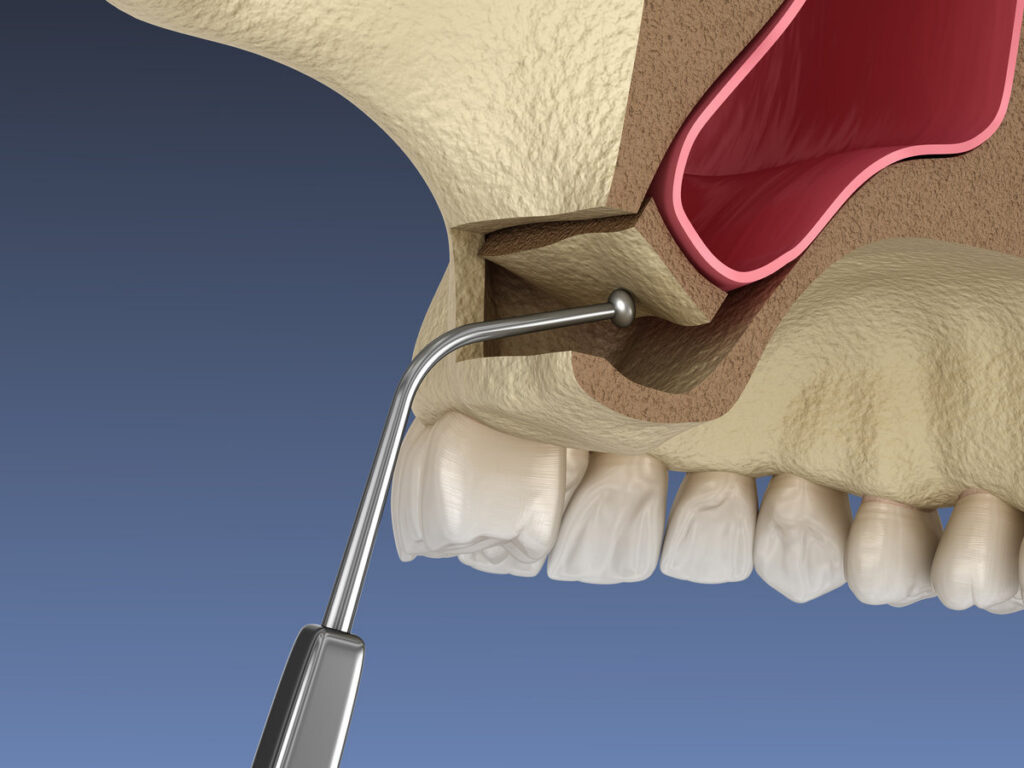
A sinus lift, also called a sinus augmentation, is a surgical procedure that adds bone volume to the upper jaw in the area of the molars and premolars. The procedure gently lifts the sinus membrane upward and places bone graft material in the space created beneath it. Over a healing period of several months, that graft material integrates with the existing bone, creating a thicker, more stable foundation for implant placement.
There are two main approaches depending on how much bone height needs to be gained. The lateral window technique involves accessing the sinus through a small opening in the side of the upper jaw, which allows for more significant bone augmentation. The transcrestal technique, which is less invasive, is performed through the same site where the implant will eventually be placed and is appropriate when the bone deficit is smaller.
When Is a Sinus Lift Actually Necessary?
Not every implant patient needs one. A sinus lift becomes necessary when there is insufficient vertical bone height in the upper posterior jaw to safely support an implant. This is typically determined through 3D imaging or a CBCT scan, which gives a precise measurement of available bone depth. Patients who have been missing upper back teeth for several years, have a history of gum disease, or have naturally large sinuses are the most common candidates.
Conditions like periodontal disease can accelerate the rate of bone loss, which means some patients arrive at their implant consultation with significantly less remaining bone than others in similar situations. The earlier a patient pursues tooth replacement after loss, the less likely a sinus lift will be needed, but when it is needed, it’s a predictable and well-established solution.
What to Expect During Recovery
A sinus lift is a surgical procedure, so there is a healing period involved. Most patients experience swelling, some pressure in the sinus area, and mild discomfort for the first week or so. Patients are typically advised to avoid blowing their nose forcefully, sneezing with an open mouth when possible, and any activities that create pressure changes in the sinuses during the initial healing window. These precautions help protect the sinus membrane while the graft begins to integrate.
Once the graft has fully healed, implant placement follows as a separate appointment. For patients interested in long-term implant outcomes, our blog on how to increase dental implant longevity covers the habits and follow-up care that make the biggest difference. For patients who are missing multiple teeth, implant-supported dentures may also be worth exploring as part of a comprehensive treatment plan.
Talk to Newport Beach Dental Center About Your Implant Readiness
A sinus lift is not a setback, it’s a step in the process, and for many patients it’s the step that makes a successful, lasting implant possible. Dr. Sharbash’s FAGD designation required completing over 500 hours of continuing education and passing a rigorous exam, and her conservative, biomimetic approach to treatment ensures that every preparatory procedure is recommended for the right reasons. You can read more about her credentials and philosophy on her provider profile.
If you have questions about implant candidacy or want to understand whether a sinus lift might be part of your plan, request an appointment online today. We’re here to walk you through every step.