
Your gums do a lot more than most people give them credit for. They frame your smile, protect your teeth, and play a major role in whether certain dental treatments are even possible. When there is not enough visible tooth structure above the gumline, whether due to a “gummy smile,” decay extending below the gums, or a broken tooth, crown lengthening can be a solution that opens the door to a healthier, more functional, and more confident smile.
At Newport Beach Dental Center, we understand how important it is to address both the aesthetics and the function of your smile with precision. Dr. Laura Sharbash, DDS, FAGD, D.ABDSM, takes a conservative, biomimetic approach to every procedure, and crown lengthening is no exception. Whether it is preparing a tooth for a dental crown or improving the proportions of your smile, we approach every case with your long-term oral health in mind. Crown lengthening falls under the broader umbrella of gum disease treatment and periodontal care, and understanding what it involves is the first step toward deciding if it is right for you.
What Is Crown Lengthening?
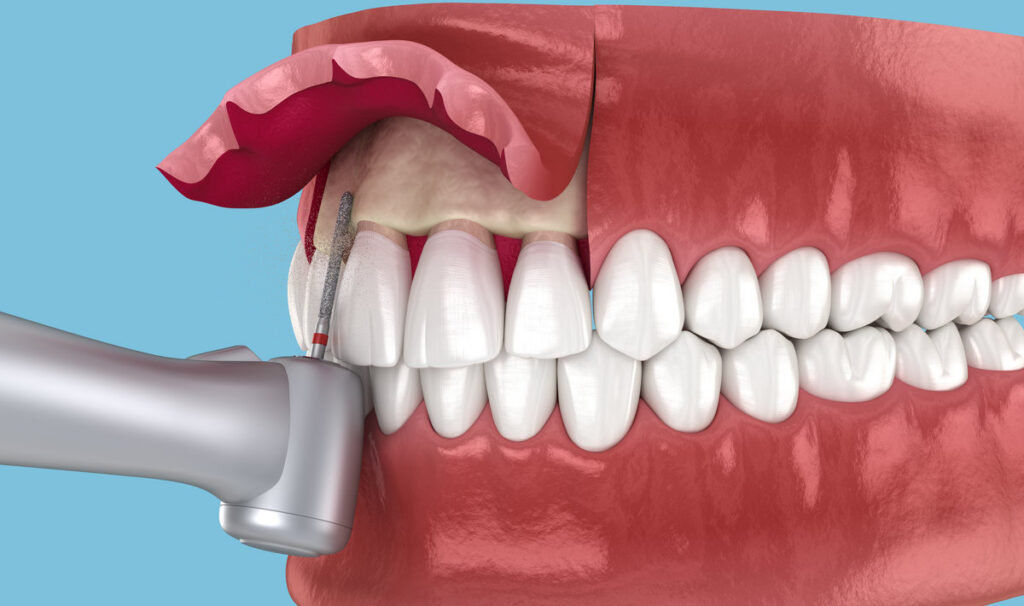
Crown lengthening is a periodontal procedure in which a dentist carefully removes a small amount of gum tissue, bone, or both in order to expose more of a tooth’s surface. The name can be a little misleading, since the tooth itself is not actually getting longer. Instead, more of the existing tooth structure is being revealed, giving us more to work with for restorative or cosmetic purposes. The procedure is performed under local anesthesia and is generally well-tolerated.
When decay, a fracture, or a failed restoration extends below the gumline, there is not enough tooth structure exposed for a crown or filling to bond to properly. Crown lengthening addresses this directly by adjusting the gum and bone levels to create adequate room to work. Without this step, attempting to place a restoration in those conditions can lead to fit issues, gum irritation, or restoration failure over time. Creating a clean, stable foundation first can improve the longevity and success of whatever restorative treatment follows. For a closer look at what happens during the appointment itself, see our guide to crown lengthening procedures.
Can Crown Lengthening Improve a Gummy Smile?
Yes, and this is one of the most rewarding applications of the procedure. A gummy smile occurs when an excess of gum tissue covers a larger portion of the teeth than is typical, making teeth appear short or uneven. Crown lengthening removes this excess tissue to reveal more of the natural tooth crown, creating a more balanced and proportional smile. For patients considering a complete smile makeover, crown lengthening can serve as a meaningful starting point that supports the results of everything else.
Crown lengthening offers a range of meaningful benefits that extend beyond aesthetics. Here is a look at what patients can expect from this procedure:
- Improved smile symmetry: More of the natural tooth surface is revealed, creating a balanced, even appearance across the smile.
- Better conditions for dental restorations: Crowns and fillings have more tooth structure to bond to, which supports fit and durability.
- Reduced risk of recurring issues: Fully exposing decay or damage below the gumline allows us to address problems completely rather than partially.
- Healthier gum tissue long-term: Properly contoured gums are easier to clean and less prone to harboring bacteria in hard-to-reach pockets.
Each of these benefits works together to support a healthier mouth overall, and patients who address gum-related concerns early often avoid more complex treatments down the road.
Is Crown Lengthening Right for You?
Crown lengthening is not a one-size-fits-all recommendation, and candidacy depends on your specific dental situation. Patients dealing with gum recession or significant gum coverage over healthy teeth may be good candidates, while others may benefit more from alternative approaches. A thorough evaluation, including x-rays and a full assessment of your gum health, is always the starting point before any treatment decisions are made.
Recovery from crown lengthening is typically manageable, with most patients returning to normal routines within a few days. Swelling and mild discomfort are common in the first 24 to 48 hours, and our team provides detailed aftercare instructions to make the process as smooth as possible. Full gum tissue healing generally takes a few weeks, after which any needed restorative work can proceed on a stable foundation. If you have questions about discomfort during recovery, our page on whether crown lengthening is painful covers what most patients experience in more detail.
How Crown Lengthening Fits Into Your Broader Treatment Plan
Crown lengthening is rarely the final step on its own. In most cases, it is one part of a larger plan that may include a restoration, a cosmetic procedure, or ongoing periodontal maintenance. Because gum and bone levels need time to heal and stabilize before a crown or filling is placed, your dentist maps out the full sequence of treatment in advance so you know what to expect at each stage, from the initial procedure through the placement of your final restoration.
This is also a good time to ask about long-term maintenance. Once your gum tissue has healed and any restorative work is complete, keeping up with routine cleanings and periodontal checkups helps protect the results and reduces the likelihood of needing additional gum-related treatment in the future.
Frequently Asked Questions About Crown Lengthening
How long does a crown lengthening procedure take?
Most crown lengthening procedures take between thirty minutes and about an hour and a half, depending on how many teeth are involved and whether bone needs to be reshaped in addition to gum tissue. Your dentist will give you a more specific estimate once your treatment plan is finalized.
How soon after crown lengthening can a crown be placed?
Gum and bone tissue generally need several weeks to heal and stabilize before a permanent crown or filling is placed on top. Placing a restoration too early can affect the fit and long-term success of the treatment, so your dentist confirms healing is complete before moving forward.
Is crown lengthening the same as a gum lift?
The terms are often used interchangeably when the goal is cosmetic, such as correcting a gummy smile. Clinically, crown lengthening can also involve reshaping the underlying bone when more tooth structure needs to be exposed, not just the gum tissue, which is why an evaluation determines the right approach for your case.
Will my teeth look different in size after crown lengthening?
Your teeth are not actually made longer during the procedure. Instead, existing tooth structure that was covered by excess gum tissue becomes visible, which can make teeth appear longer and more proportional even though no new tooth material is added.
Does dental insurance cover crown lengthening?
Coverage varies by plan and often depends on whether the procedure is considered medically necessary, such as preparing a tooth for a restoration, versus primarily cosmetic. Our team can help you review your specific benefits and discuss options during your consultation.
Schedule a Consultation at Newport Beach Dental Center
If you have been told you need crown lengthening, or you are simply curious whether the procedure could help you achieve the smile you have been working toward, we would love to walk you through your options. Dr. Laura Sharbash brings advanced training, including her Fellowship with the Academy of General Dentistry and her Diplomate status with the American Board of Dental Sleep Medicine, to every patient interaction. Learn more about Dr. Sharbash and our practice to see what sets our approach apart.
We are here to help you make confident, informed decisions about your dental health with care that is conservative, precise, and focused on your long-term wellbeing. Contact our office today to schedule your consultation and take the first step toward a healthier, more complete smile.