The cost of dental implants depends on what your mouth needs, which is why two patients rarely end up with the same price. Think of it like a home renovation: the final number comes down to the size of the project, the prep work, and what is hiding under the floorboards. The biggest drivers are how many teeth you are replacing, the type of restoration on top, any preparation work, and how insurance or financing fits into your plan.
Our team at Newport Beach Dental Center helps patients across Newport Beach weigh their options for dental implants with clear information and a plan built around their goals. We break down each factor here so you can arrive at a consultation with confident questions and a clearer picture of your budget.
Why an Exam Comes Before Any Price Quote
A fair price starts with a real diagnosis. The American Dental Association says patients should first be comprehensively examined by a dentist and then talk through the range of treatment options based on that diagnosis. Depending on your oral health and preferences, those options may include restorations, crowns, bridges, implants, or dentures.
Your exam may include X-rays and a close look at your gums, which can show whether you need gum disease treatment before an implant is placed. Every finding shapes your plan, and your plan shapes your cost. The ADA also encourages patients to ask questions and to seek a second opinion when a recommendation does not feel right, which is a smart habit for any major treatment.
The Main Factors Behind Your Total
Several pieces come together to form your final cost, and each one is worth a question during your consultation. Here are the main factors to ask about:
Number of teeth: Replacing one tooth is a smaller project than replacing several, and each implant adds to the total.
Preparation work: Some mouths need extractions, bone grafting, or gum treatment before an implant can be placed, which adds steps and visits.
Materials: Implant parts and restorations come in different materials, and your choice may affect the price.
Insurance coverage: Benefits for implants vary by plan, so checking your policy early may prevent surprises.
Because these pieces vary from person to person, a price quote given without an exam is closer to a guess than a plan. Each factor also affects the others, so a clear treatment plan gives you the most reliable picture of what to expect.
Why Two Quotes Can Look So Different
Two offices can quote very different totals for what sounds like the same treatment. One quote may include preparation work and the final restoration, while another may list only the implant itself, so the numbers are not always a fair match.
When you compare quotes, ask what each one includes, from the exam and imaging to any prep work and the restoration on top. A side-by-side look at the same steps tells you far more than the bottom-line number alone.
Planning Your Budget With Confidence
A little preparation can make the financial side of dental implants feel more manageable. Taking a few small steps before your visit may help.
Check Your Insurance First
Coverage for implants varies by plan, so review your benefits before your visit. We work with you to maximize your benefits and keep billing smooth, and you can find more details on our insurance page.
Talk Financing After Your Plan Is Set
The ADA says any discussion of financing for complex procedures, such as implants, should happen after you have talked through your treatment options with your dentist. Once your plan is clear, our team can go over financing options with you, including CareCredit and Cherry.
Ask for a Clear Breakdown
Ask your dentist to walk you through each step of your plan, from the exam to the final restoration, so you can see where each part of the cost comes from. A clear breakdown makes it easier to compare options and decide what fits your budget.
Schedule Your Implant Consultation at Newport Beach Dental Center
Dr. Laura Sharbash leads our team in Newport Beach. She is a Fellow of the Academy of General Dentistry (FAGD) and a Diplomate of the American Board of Dental Sleep Medicine (D.ABDSM), and she pairs those credentials with a conservative, biomimetic, gentle approach to care. We aim to give you honest answers, a clear plan, and room to ask every question you have.
Your cost depends on your mouth, your plan, and your goals, so the best next step is a conversation. Our team can review your insurance benefits and talk through financing options with you. When you are ready, contact our office to schedule a consultation at Newport Beach Dental Center.
A dentist examines a cracked, decayed, or broken tooth and recommends a crown, then mentions an extra step before that crown can go on. For many patients, this raises an obvious question about why the tooth needs work first when a crown is already the plan. Much of it comes down to how much healthy tooth structure a dentist needs to see and reach to build a restoration that stays sealed, comfortable, and stable for years. Skipping that step on a tooth that is too short or too deeply damaged can mean a crown that leaks, loosens, or irritates the surrounding gum tissue within months of being placed.
At Newport Beach Dental Center, this preparatory step is called crown lengthening, and it falls under the periodontal care we provide before certain restorations move forward. Dr. Jeremy Owyoung, our periodontist, performs the procedure to reshape gum tissue and, when needed, the bone beneath it, creating enough exposed tooth structure for a crown or bridge to seat with a secure, well-sealed margin. Rather than treating crown lengthening as an unrelated referral, we coordinate it directly with the restorative care a patient already needs, so treatment moves forward as one connected process.
How Crown Lengthening Changes the Tooth
Every tooth needs a certain amount of solid structure above the gum line for a crown to grip onto and seal against. When a tooth has broken at or below the gum, has decay that extends underneath the tissue, or was fitted with a crown that never had enough of a base, that structure may not be exposed enough to work with, and crown lengthening addresses this directly. Dr. Owyoung trims back a small amount of gum tissue and, in some cases, gently reduces the bone level around the tooth, moving the gum edge further down the root. This gives a future crown more clean tooth structure to hold onto.
The procedure itself typically takes less than an hour, and most patients return to normal activities within a day or two. What takes longer is the healing that follows, and that healing period is the main reason a restoration can’t go on right away.
Why the Timing Matters for a Lasting Restoration
Once the gum tissue and bone have had time to heal, Dr. Laura Sharbash completes the restorative side of treatment, placing the crown, bridge, or other permanent restoration a patient originally came in for. The interval between the two procedures is not selected at random. Every tooth is surrounded by a thin band of gum and connective tissue called the biologic width, which protects the bone and seals the gum against the tooth. Research published through the National Library of Medicine found that gum and bone tissue continue shifting for roughly three months after crown lengthening surgery before stabilizing.
Placing a crown margin too close to tissue that has not finished healing can trap plaque, invite inflammation, and loosen the restoration itself. This is why a dentist may ask a patient to wait before finalizing a crown or bridge after periodontal surgery. The wait gives the gum and bone time to settle into their new position, so the final restoration sits against healthy, stable tissue rather than tissue still healing.
Signs a Restoration May Need Crown Lengthening First
A patient does not always know in advance whether a tooth will need this extra step, but a few patterns tend to show up during an exam, including:
A tooth broken or decayed at or below the gum line, leaving little visible structure to build on
A crown or filling that keeps coming loose because the tooth underneath is too short
An uneven gumline where one tooth sits noticeably shorter than its neighbors
A fracture that extends below the gum after an injury or a large, failing filling
Any of these situations is worth bringing up during a consultation, as addressing them early can prevent a restoration from failing months after it was placed. Patients who want more detail on what recovery feels like can also read our guide on whether crown lengthening is painful.
Schedule Your Crown Lengthening Consultation at Newport Beach Dental Center
A tooth that needs both crown lengthening and a restoration should not feel like two disconnected experiences. Our team plans the periodontal and restorative sides of treatment together from the start, so you will always knows what happens next and why. Dr. Owyoung handles the surgical portion, and Dr. Sharbash, a Fellow of the Academy of General Dentistry, completes the crown or bridge once the tissue is ready.
If you have noticed a chipped tooth, a loose crown, or a gumline that looks uneven around one tooth, do not wait for the problem to get worse before asking about it. We can look at the tooth in person, explain whether crown lengthening applies to your situation, and map out a timeline that leads to a finished restoration without any guesswork. Reach out through our contact form to schedule a visit and get a clear picture of what your tooth needs.
Your gums are not supposed to disappear on you, but for millions of adults, that is exactly what happens, slowly and quietly, until sensitivity shows up uninvited and teeth start looking a little taller than they used to. Gum recession tends to sneak up on people because it does not always hurt at first. By the time you notice something is off, the tissue has already pulled back from where it belongs.
The good news is that gum recession is manageable when it is caught and treated with the right approach. At Newport Beach Dental Center, Dr. Laura Sharbash, DDS, FAGD, D.ABDSM, brings a conservative, biomimetic perspective to every evaluation, which means we look at the full picture before making any recommendations. Our periodontics services are designed to address gum concerns at every stage, whether you are dealing with early-stage recession or a more advanced condition.
42.2%
of U.S. adults 30 and older have some form of periodontal disease
Under 6%
of general dentists nationwide hold an FAGD Fellowship
What Causes Gum Recession?
There is no single culprit behind receding gums, and that is actually what makes it so easy to miss until it has already progressed. Some of the most common contributing factors include the following.
Aggressive Brushing
Scrubbing harder does not mean cleaner. Too much pressure or a stiff-bristle brush wears away gum tissue over the years.
Periodontal Disease
Bacterial infection below the gumline damages the tissue and bone supporting your teeth.
Genetics
Some people simply have thinner gum tissue or less dense bone structure, making recession more likely.
Teeth Grinding
Chronic grinding and clenching put ongoing mechanical stress on teeth and the surrounding gum tissue.
Hormonal Shifts
Changes during puberty, pregnancy, and menopause can make gums more reactive and prone to pulling back.
Tobacco Use
Smoking and smokeless tobacco reduce blood flow to the gums, a strong risk factor for recession.
These factors often pile up, and data from the National Institute of Dental and Craniofacial Research show that 42.2% of U.S. adults aged 30 and older have some form of periodontal disease, a condition closely linked to gum recession. Tobacco use is also connected to a higher risk of gum disease generally, which compounds the problem further.
How to Recognize the Symptoms of Gum Recession
Gum recession gives off some fairly clear signals once you know what to look for.
Tooth Sensitivity
Discomfort from cold, sweet, or acidic foods, since exposed roots lack the enamel protection of the crown.
A Longer-Looking Smile
Certain teeth appear longer than before, or the gumline looks uneven across your smile.
A Notch Near the Gumline
A small groove or notch where the tooth meets the gum is a common early sign.
Tooth Mobility
Slight looseness in more advanced cases suggests the underlying bone is involved.
What makes recession a little tricky is that it does not always come with pain, so it is easy to put off until a routine visit catches it. Identifying it early keeps treatment simpler and more conservative.
When to See a Dentist About Gum Recession
A single symptom on its own is not necessarily urgent, but a combination of sensitivity, a changing gumline, or any looseness is worth having evaluated sooner rather than later. Recession does not reverse on its own, and the longer it continues, the more of the root and supporting bone can become involved. If any of the signs above sound familiar, or it has simply been a while since your last periodontal check, reach out to our office to get a clear picture of what is happening.
Treatment Options for Receding Gums
The right approach to treating recession depends on what caused it and how far it has progressed. In many cases, treatment starts conservatively and only moves toward surgery when it is genuinely warranted.
Treating the Source First
Surgical & Regenerative Options
What it involves
Scaling and root planing, plus brushing technique correction
Soft-tissue grafting or guided tissue regeneration
Best for
Early-stage recession or active gum disease
Recession that has progressed or exposed the root
Recovery
Minimal; results build over subsequent cleanings
One to two weeks of soreness and dietary adjustment
Both approaches reflect Dr. Sharbash’s commitment to biomimetic dentistry, which prioritizes preserving natural structure whenever possible. Our dedicated page on gum recession treatment walks through what each option may involve in more detail.
How We Determine the Right Treatment
Every recommendation starts with a full periodontal evaluation, including measuring gum tissue around each tooth and reviewing what may have caused the recession in the first place. If grafting is being considered, our page on gum grafting and whether you need it breaks down what the procedure involves, what the different graft types are used for, and how recovery typically goes. We only recommend surgery once more conservative options have been ruled out or attempted first.
Keeping Your Gums Healthy Long-Term
Protecting your gum tissue over time does not require a complicated routine. A few consistent habits go a long way:
Soft-bristled toothbrush: A gentler brush and lighter pressure reduce ongoing wear on the gum tissue.
Daily flossing: Removing plaque between teeth helps prevent the bacterial buildup that leads to periodontal disease.
Regular dental visits: Routine cleanings and periodontal checks catch early changes before they progress.
Custom nightguards: If grinding is part of the picture, a nightguard takes the pressure off your gums and bone while you sleep.
Handling early signs of inflammation before they develop further is, without question, the most effective long-term strategy for keeping your natural gum tissue in place.
Healthier Gums Start at Newport Beach Dental Center
Receding gums are common, but that does not make them inevitable or irreversible. Dr. Sharbash holds a Fellowship from the Academy of General Dentistry, a credential held by fewer than 6% of general dentists in the U.S., and she brings that depth of clinical training to every periodontal evaluation. Our conservative approach means we look for the most effective and least invasive path forward for your specific situation.
Have Questions About Your Gumline?
Let Dr. Laura Sharbash and the team at Newport Beach Dental Center take a look and map out the most conservative path forward.
We accept Delta Dental as an in-network provider, and financing options through CareCredit and Cherry are available to help make care accessible. If sensitivity, a shifting gumline, or a general curiosity about your gum health has been on your mind, we would love to help you get some answers. Request an appointment online and let us take a look.
Frequently Asked Questions About Receding Gums
Can receding gums grow back on their own?
Gum tissue that has receded generally does not regenerate on its own. However, recession can be stopped from progressing further with the right care, and in cases with root exposure or thin tissue, grafting can restore lost coverage.
Is gum recession always caused by gum disease?
No. While periodontal disease is a common cause, recession can also result from aggressive brushing, teeth grinding, genetics, hormonal changes, or tobacco use. A dental evaluation helps identify which factors are contributing in your case.
What happens if receding gums are left untreated?
Untreated recession can progress to greater root exposure, increased sensitivity, a higher risk of decay near the roots, and eventually looseness if the supporting bone becomes involved. Addressing it earlier generally allows for more conservative treatment.
How can I tell if my gum recession needs a graft?
Signs like persistent sensitivity, visible root exposure, or recession that keeps progressing despite good habits suggest grafting may be worth discussing. A periodontal evaluation is the most reliable way to know for certain.
Does insurance cover treatment for receding gums?
Coverage depends on your specific plan and whether treatment is considered medically necessary. Newport Beach Dental Center is in-network with Delta Dental, and CareCredit and Cherry financing are available for patients without coverage.
Dr. Sharbash leads Newport Beach Dental Center with a conservative, biomimetic approach to general and periodontal care. She is a Fellow of the Academy of General Dentistry (FAGD), a credential held by fewer than 6% of general dentists nationwide.
Receding gums are more common than most people realize, and they are not just a cosmetic concern. When gum tissue pulls back and exposes more of the tooth or its root, it can lead to sensitivity, decay, and even tooth loss if left unaddressed. Gum grafting is a procedure designed to restore lost tissue, protect the tooth structure, and help stabilize your long-term oral health.
At Newport Beach Dental Center, we take a conservative, biomimetic approach to every treatment we recommend. Dr. Laura Sharbash, DDS, FAGD, D.ABDSM, brings a thorough, patient-first perspective to periodontic care, which means gum grafting is only discussed when it genuinely serves your health. Our team is here to walk through what the procedure involves and how to tell whether it may be right for you, so you can make an informed decision about your care.
What Is Gum Grafting?
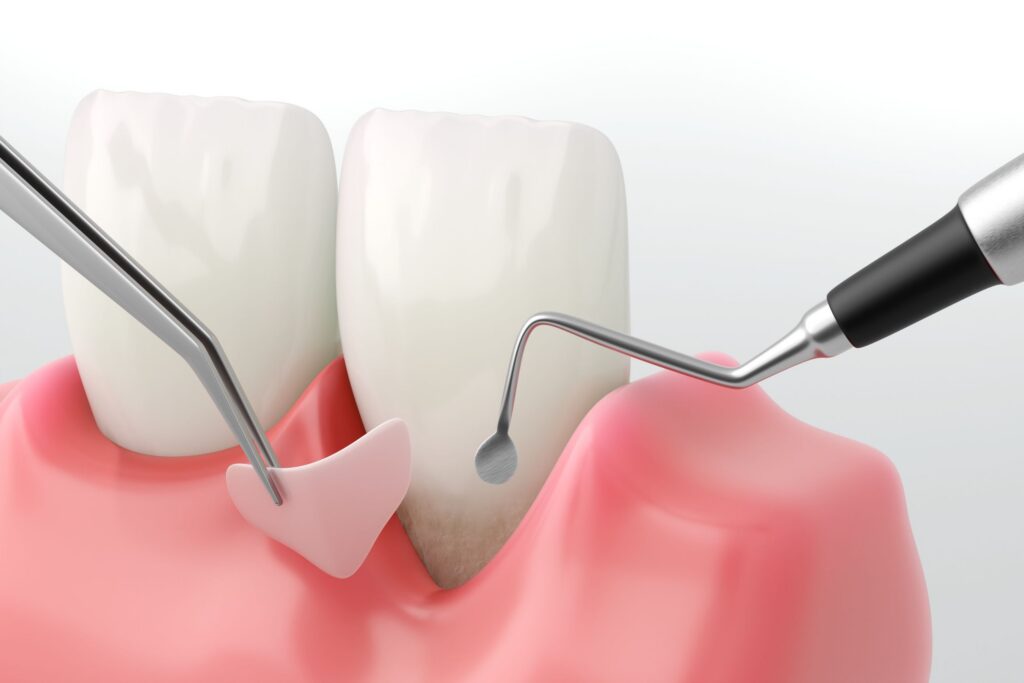
Gum grafting, also called a gingival graft, is a surgical procedure in which soft tissue is placed over areas where the gums have receded. The goal is to cover exposed root surfaces, reinforce thin gum tissue, and reduce the risk of further recession. The right approach depends on how much coverage is needed and where the donor tissue comes from.
Connective Tissue Graft
Tissue taken from beneath the surface of the palate and placed over the recession site. The most common approach for root coverage.
Free Gingival Graft
Tissue taken directly from the surface of the palate. Often used to thicken thin gum tissue rather than cover an exposed root.
Pedicle Graft
Tissue shifted from healthy gum next to the recession site. Ideal when there is enough nearby tissue to work with.
Each approach has its place, and the right choice depends on your specific anatomy and what you and our team decide together during a consultation.
2 in 5
U.S. adults 30 and older have some form of periodontitis
Under 6%
of general dentists nationwide hold an FAGD Fellowship
3 Types
of common gum graft, matched to your anatomy and coverage needs
What Causes Gum Recession?
Gum recession does not happen overnight. It tends to develop gradually, often as the result of habits or conditions that go unnoticed for years. According to the National Institute of Dental and Craniofacial Research, about 42% of adults 30 and older in the United States have some form of periodontitis, making gum health one of the most prevalent oral health concerns in the country.
Beyond gum disease, recession may also be tied to aggressive brushing, clenching or grinding, naturally thin gum tissue, certain medications, or misalignment that concentrates pressure on specific teeth. Gum disease treatment is often a necessary first step before grafting is considered, since grafting onto inflamed or actively infected tissue does not yield predictable, lasting results. Catching recession before it reaches the root or affects supporting bone keeps treatment simpler and more conservative. If you want to compare every option side by side, from deep cleanings and night guards to surgery, our guide on how to fix gum recession lays out the full treatment path.
Signs You Might Need a Gum Graft
Not every patient with gum recession needs a graft. However, certain signs suggest the situation warrants a closer look and a conversation with your dentist. You may be a candidate for gum grafting if you notice any of the following:
Root Sensitivity
Pain or discomfort when eating hot, cold, or sweet foods, which may indicate an exposed root.
Visible Root Exposure
The tooth looks longer than it used to, or a yellowish root surface is visible below the gumline.
Progressive Recession
The gum line keeps migrating upward despite consistent, gentle brushing habits.
Thin Gum Tissue
Naturally minimal gum tissue that may not adequately protect the tooth over time.
If these signs sound familiar, a thorough evaluation will help determine whether grafting, monitoring, or a different treatment is the right path forward for you.
How the Procedure Works
Gum grafting involves a brief surgical procedure, typically completed in a single visit under local anesthesia. The exact steps depend on the type of graft your case calls for. Gum grafting is periodontal surgery, which is the core training of a periodontist, and our team includes Dr. Jeremy Owyoung, who earned his specialty certificate in Periodontics and Implant Dentistry at the University of California, San Francisco and is a Diplomate of the American Board of Periodontology.
1
Evaluation & Anesthesia
The treatment area is numbed with local anesthesia after a final review of the graft plan.
2
Tissue Harvest or Repositioning
Tissue is taken from the palate or shifted from nearby healthy gum, depending on the graft type.
3
Securing the Graft
The tissue is placed over the exposed area and secured so it can integrate with the surrounding gum.
4
Healing & Follow-Up
Soreness and dietary adjustments are expected for a week or two while the tissue heals and a follow-up visit confirms progress.
The benefits, including reduced sensitivity, protected root surfaces, and a more balanced gum line, often make the short recovery period well worth it. For patients with more advanced concerns, gum grafting may be one component of a larger full-mouth reconstruction plan. After healing, complementary restorative work, such as dental crowns, may also be considered to address any damage to the exposed root structure that occurred during the period of recession.
What Recovery After a Gum Graft Looks Like
Recovery is usually the part patients ask about most. Healing happens in stages, and knowing what to expect makes the first couple of weeks much easier to plan around.
First Few Days
Soreness at the graft and donor sites is common. Soft, cool foods and rest help.
First Week
Avoid brushing or flossing the graft site until you are told it is safe, and follow any rinse instructions.
One to Two Weeks
Most patients feel much better and return to a normal diet, and a follow-up visit checks healing.
Following Weeks
The graft continues to integrate with the surrounding gum as the tissue matures.
Every recovery is a little different, and your post-operative instructions will be tailored to the type of graft you receive. If anything feels unusual while you heal, such as bleeding that does not settle or swelling that worsens after the first few days, contact our office so we can take a look.
Is Gum Grafting Right for You?
Having your gums evaluated does not mean committing to surgery. Dr. Sharbash’s conservative philosophy means every case is weighed individually, and grafting is recommended only when it serves a clear purpose for your long-term oral health. In milder cases, adjusting your brushing technique or completing gum disease treatment first may be enough to stabilize the tissue without surgical intervention. Our companion page on receding gums causes, symptoms, and treatment options covers the full range of approaches we consider before recommending a graft.
Preventing Further Gum Recession After Treatment
Protecting a graft, or preventing future recession altogether, comes down to a few consistent habits. Switching to a soft-bristled toothbrush and a gentler technique reduces ongoing mechanical wear on the gum line. If clenching or grinding is a factor, a custom nightguard can take pressure off your gums and teeth while you sleep. Regular periodontal maintenance visits also allow us to catch any new irritation early, before it progresses. For patients without dental insurance, our in-house membership plan is worth asking about to help keep follow-up care accessible.
Talk to Newport Beach Dental Center About Your Gum Health
Gum recession is worth taking seriously, but having it evaluated does not mean committing to a procedure. Dr. Sharbash’s conservative philosophy means treatment is always weighed against your individual circumstances, and grafting is recommended only when it serves a clear clinical purpose. As a Fellow of the Academy of General Dentistry (FAGD), she holds advanced credentials earned by fewer than 6% of general dentists nationwide, and her approach reflects that depth of training.
Ready to Talk About Your Gum Health?
Schedule a consultation with Dr. Laura Sharbash and the team at Newport Beach Dental Center to find out whether gum grafting fits your situation.
Whether you have noticed increased sensitivity, visible recession, or simply want a baseline assessment of your gum health, our team is here to help. We welcome CareCredit and Cherry financing to keep care accessible, and we are in-network with Delta Dental. Reach out to us today to schedule a consultation and get the answers you need.
Frequently Asked Questions About Gum Grafting
Does gum grafting hurt?
The procedure itself is performed under local anesthesia, so patients typically do not feel pain during grafting. Some soreness and sensitivity in the treated area is common for several days afterward, and it is usually manageable with over-the-counter pain relief and a soft-food diet during recovery.
How long does it take to recover from a gum graft?
Most patients notice significant improvement within one to two weeks, though the graft site continues to fully integrate with surrounding tissue over several additional weeks. Your dentist will schedule a follow-up visit to confirm the tissue is healing as expected.
Will dental insurance cover gum grafting?
Coverage varies by plan and by whether the procedure is considered medically necessary. Newport Beach Dental Center is in-network with Delta Dental, and CareCredit and Cherry financing are available to help make treatment accessible regardless of your insurance situation.
Can gum recession improve without a graft?
In milder or early cases, addressing the underlying cause, such as improving your brushing technique or completing gum disease treatment, can help stabilize the tissue without surgery. Grafting is generally reserved for cases where recession is more advanced or continuing to progress.
How long do the results of a gum graft last?
Gum grafts are intended to provide a long-term solution to recession and, with consistent oral hygiene and regular dental visits, many patients maintain their results for many years. Ongoing habits like gentle brushing and nightguard use for grinding help protect the graft over time.
Your gums do a lot more than most people give them credit for. They frame your smile, protect your teeth, and play a major role in whether certain dental treatments are even possible. When there is not enough visible tooth structure above the gumline, whether due to a “gummy smile,” decay extending below the gums, or a broken tooth, crown lengthening can be a solution that opens the door to a healthier, more functional, and more confident smile.
At Newport Beach Dental Center, we understand how important it is to address both the aesthetics and the function of your smile with precision. Dr. Laura Sharbash, DDS, FAGD, D.ABDSM, takes a conservative, biomimetic approach to every procedure, and crown lengthening is no exception. Whether it is preparing a tooth for a dental crown or improving the proportions of your smile, we approach every case with your long-term oral health in mind. Crown lengthening falls under the broader umbrella of gum disease treatment and periodontal care, and understanding what it involves is the first step toward deciding if it is right for you.
What Is Crown Lengthening?
Crown lengthening is a periodontal procedure in which a dentist carefully removes a small amount of gum tissue, bone, or both in order to expose more of a tooth’s surface. The name can be a little misleading, since the tooth itself is not actually getting longer. Instead, more of the existing tooth structure is being revealed, giving us more to work with for restorative or cosmetic purposes. The procedure is performed under local anesthesia and is generally well-tolerated.
When decay, a fracture, or a failed restoration extends below the gumline, there is not enough tooth structure exposed for a crown or filling to bond to properly. Crown lengthening addresses this directly by adjusting the gum and bone levels to create adequate room to work. Without this step, attempting to place a restoration in those conditions can lead to fit issues, gum irritation, or restoration failure over time. Creating a clean, stable foundation first can improve the longevity and success of whatever restorative treatment follows. For a closer look at what happens during the appointment itself, see our guide to crown lengthening procedures.
Can Crown Lengthening Improve a Gummy Smile?
Yes, and this is one of the most rewarding applications of the procedure. A gummy smile occurs when an excess of gum tissue covers a larger portion of the teeth than is typical, making teeth appear short or uneven. Crown lengthening removes this excess tissue to reveal more of the natural tooth crown, creating a more balanced and proportional smile. For patients considering a complete smile makeover, crown lengthening can serve as a meaningful starting point that supports the results of everything else.
Crown lengthening offers a range of meaningful benefits that extend beyond aesthetics. Here is a look at what patients can expect from this procedure:
Improved smile symmetry: More of the natural tooth surface is revealed, creating a balanced, even appearance across the smile.
Better conditions for dental restorations: Crowns and fillings have more tooth structure to bond to, which supports fit and durability.
Reduced risk of recurring issues: Fully exposing decay or damage below the gumline allows us to address problems completely rather than partially.
Healthier gum tissue long-term: Properly contoured gums are easier to clean and less prone to harboring bacteria in hard-to-reach pockets.
Each of these benefits works together to support a healthier mouth overall, and patients who address gum-related concerns early often avoid more complex treatments down the road.
Is Crown Lengthening Right for You?
Crown lengthening is not a one-size-fits-all recommendation, and candidacy depends on your specific dental situation. Patients dealing with gum recession or significant gum coverage over healthy teeth may be good candidates, while others may benefit more from alternative approaches. A thorough evaluation, including x-rays and a full assessment of your gum health, is always the starting point before any treatment decisions are made.
Recovery from crown lengthening is typically manageable, with most patients returning to normal routines within a few days. Swelling and mild discomfort are common in the first 24 to 48 hours, and our team provides detailed aftercare instructions to make the process as smooth as possible. Full gum tissue healing generally takes a few weeks, after which any needed restorative work can proceed on a stable foundation. If you have questions about discomfort during recovery, our page on whether crown lengthening is painful covers what most patients experience in more detail.
How Crown Lengthening Fits Into Your Broader Treatment Plan
Crown lengthening is rarely the final step on its own. In most cases, it is one part of a larger plan that may include a restoration, a cosmetic procedure, or ongoing periodontal maintenance. Because gum and bone levels need time to heal and stabilize before a crown or filling is placed, your dentist maps out the full sequence of treatment in advance so you know what to expect at each stage, from the initial procedure through the placement of your final restoration.
This is also a good time to ask about long-term maintenance. Once your gum tissue has healed and any restorative work is complete, keeping up with routine cleanings and periodontal checkups helps protect the results and reduces the likelihood of needing additional gum-related treatment in the future.
Frequently Asked Questions About Crown Lengthening
How long does a crown lengthening procedure take?
Most crown lengthening procedures take between thirty minutes and about an hour and a half, depending on how many teeth are involved and whether bone needs to be reshaped in addition to gum tissue. Your dentist will give you a more specific estimate once your treatment plan is finalized.
How soon after crown lengthening can a crown be placed?
Gum and bone tissue generally need several weeks to heal and stabilize before a permanent crown or filling is placed on top. Placing a restoration too early can affect the fit and long-term success of the treatment, so your dentist confirms healing is complete before moving forward.
Is crown lengthening the same as a gum lift?
The terms are often used interchangeably when the goal is cosmetic, such as correcting a gummy smile. Clinically, crown lengthening can also involve reshaping the underlying bone when more tooth structure needs to be exposed, not just the gum tissue, which is why an evaluation determines the right approach for your case.
Will my teeth look different in size after crown lengthening?
Your teeth are not actually made longer during the procedure. Instead, existing tooth structure that was covered by excess gum tissue becomes visible, which can make teeth appear longer and more proportional even though no new tooth material is added.
Does dental insurance cover crown lengthening?
Coverage varies by plan and often depends on whether the procedure is considered medically necessary, such as preparing a tooth for a restoration, versus primarily cosmetic. Our team can help you review your specific benefits and discuss options during your consultation.
Schedule a Consultation at Newport Beach Dental Center
If you have been told you need crown lengthening, or you are simply curious whether the procedure could help you achieve the smile you have been working toward, we would love to walk you through your options. Dr. Laura Sharbash brings advanced training, including her Fellowship with the Academy of General Dentistry and her Diplomate status with the American Board of Dental Sleep Medicine, to every patient interaction. Learn more about Dr. Sharbash and our practice to see what sets our approach apart.
We are here to help you make confident, informed decisions about your dental health with care that is conservative, precise, and focused on your long-term wellbeing. Contact our office today to schedule your consultation and take the first step toward a healthier, more complete smile.
A tooth may need a root canal when the soft tissue inside it, called the pulp, is inflamed beyond the point of healing or has become infected. The signs that point most strongly in that direction are tooth pain that lingers after hot or cold is gone, pain that starts on its own or wakes you at night, a tooth that hurts to bite on, a pimple-like bump on the gum near one tooth, and a single tooth that turns darker than its neighbors. None of these signs proves you need a root canal on its own, and some infected teeth cause no symptoms at all, which is why an exam and an X-ray are the only way to know for sure.
At Newport Beach Dental Center, Dr. Laura Sharbash, DDS, FAGD, D.ABDSM, evaluates and provides root canal treatment in Newport Beach with a conservative philosophy: save the natural tooth whenever it can be saved. This post focuses on the part most people are unsure about, which is telling the warning signs of a pulp problem apart from everyday sensitivity and other causes of tooth pain, and knowing how urgently to act.
Common Signs You Might Need a Root Canal
Your pulp holds the nerves, blood vessels, and connective tissue that keep a tooth alive. Deep decay, a crack, repeated dental work on the same tooth, or an injury can let bacteria or trauma reach it. Mild, short-lived irritation of the pulp can settle down once the cause is fixed. When the inflammation passes the point of recovery, or the pulp dies and becomes infected, the tissue has to be removed to save the tooth. These are the signs that suggest that line has been crossed.
Persistent or Spontaneous Tooth Pain
Pain that throbs without a trigger, comes back throughout the day, or wakes you from sleep is a more serious signal than pain you only notice while eating. Pain can also radiate to your jaw, ear, or neighboring teeth, which sometimes makes it hard to tell which tooth is the source. Unlike occasional sensitivity, pain that indicates a need for root canal therapy tends to be more persistent and often more intense.
Sensitivity to Hot or Cold That Lingers
The key word is lingering. A quick zing from ice water that fades within a few seconds is common and is often related to worn enamel or exposed root surfaces. A deep ache that keeps going for many seconds or minutes after the hot coffee or cold drink is gone is different. According to the Cleveland Clinic’s overview of pulpitis, lingering sensitivity to heat or cold is the main sign that pulp inflammation has become irreversible, meaning the tissue is unlikely to heal on its own.
Pain When You Bite or Press on the Tooth
When infection or inflammation spreads from the pulp to the tissues around the root tip, the tooth can feel sore when you chew, tap on it, or clench. Some people describe the tooth as feeling slightly “high” or bruised. Tenderness to biting can also come from a crack or a filling that sits too high, so this sign needs a closer look before anyone decides on treatment.
Swelling or a Pimple on the Gum
Swelling near a problematic tooth can indicate an infection that needs addressing. A small bump on the gum that comes and goes, or releases a bad taste when it drains, is often a drainage path for infection at the root tip, sometimes called a fistula or sinus tract. Because the pressure drains, the tooth may stop hurting, which can make people think the problem has resolved when the infection is still present. Sometimes this swelling leads to a dental abscess, a pocket of infection that can be serious if left untreated.
A Single Tooth That Darkens
A tooth that turns gray, brown, or noticeably darker than the teeth around it can mean the pulp has been damaged or has died, often after an old injury. Teeth naturally darken a little with age and can stain from coffee, tea, and wine, but those changes usually affect many teeth at once. One tooth changing color by itself is worth an exam.
Deep Decay, Cracks, or a Heavily Restored Tooth
A deep cavity, a crack that extends toward the center of the tooth, a large or leaking filling, or a tooth that has had several procedures over the years all create pathways for bacteria to reach the pulp. These teeth may not hurt yet, but they carry a higher risk of developing a pulp problem.
When Tooth Pain Is Probably Not a Root Canal Problem
Many toothaches have nothing to do with the pulp, and treating the wrong cause wastes time and money. Part of a careful evaluation is ruling out the look-alikes before recommending a root canal. These are some of the most common ones we see.
Brief sensitivity from receding gums or worn enamel: a sharp twinge that disappears within seconds and affects several teeth often comes from exposed root surfaces, which may be related to gum disease or aggressive brushing.
Sinus pressure: a sinus infection or allergies can make several upper back teeth ache at once, especially when you bend over.
Clenching and grinding: soreness in multiple teeth on waking, along with jaw tension, often points to nighttime grinding, which a custom nightguard may help with.
Gum problems: food trapped under the gum or a gum infection can cause localized pain and swelling that feels like a tooth problem.
A recent filling that sits high: a new filling that hits first when you bite can make the tooth sore until the bite is adjusted.
If your symptoms fit one of these patterns, treatment may be far simpler than a root canal. If they do not, or if you are unsure, an evaluation is the fastest way to an answer.
How We Confirm Whether a Tooth Needs a Root Canal
Symptoms alone are not enough to diagnose a pulp problem, and the absence of symptoms does not rule one out. When pulp tissue dies, the temperature sensitivity often disappears, and the first clue may be a dark area at the root tip on an X-ray taken at a routine visit. To build a clear picture, Dr. Sharbash combines several pieces of information.
She starts with your history: when the pain began, what triggers it, how long it lasts, and whether it has changed. Digital X-rays show the depth of decay, the shape of the roots, and any changes in the bone around them. Simple tests compare the suspect tooth with its neighbors, such as a cold test to see how the pulp responds and gentle tapping or pressure to check the tissues around the root. Looking for cracks, checking the gums, and reviewing the bite help rule out the look-alikes described above. Together, these findings determine whether the pulp can recover with a filling or other conservative care, whether a root canal gives the tooth its best chance, or whether the tooth cannot be saved.
How Urgent Are Your Symptoms?
Not every sign needs same-day care, but some do. Use this as a general guide, not a substitute for professional advice.
Call the office promptly if you have pain that lingers after hot or cold, pain that wakes you up, a tooth that hurts to bite on, or a bump on your gum. These signs usually mean the problem will not resolve on its own, and earlier treatment generally gives the tooth a better chance of being saved. Our guide to handling a dental emergency covers what you can do at home in the meantime.
Seek emergency medical care right away if facial swelling is spreading, you have a fever, or you have trouble swallowing or breathing. These can be signs that a dental infection is spreading beyond the tooth, and they need immediate attention at an emergency room.
Do not rely on antibiotics alone. American Dental Association guidance advises against antibiotics for most toothaches when there are no signs of spreading infection, because the source of the problem is inside the tooth. Antibiotics may calm symptoms for a while, but the damaged pulp remains and the pain usually returns.
What Happens If You Wait
An infected pulp does not heal on its own. Over time, infection can spread to the bone around the root, an abscess can form, and the tooth can weaken to the point where it fractures or can no longer be restored. Pain may come and go during this process, so a quiet week is not a sign of recovery. Waiting can also narrow your options. A tooth that could have been saved with a root canal and a crown may later need extraction, followed by a bridge or dental implant to replace it, which typically involves more time and expense.
Root Canal Treatment Compared With Extraction
When a tooth’s pulp is beyond repair, the two main paths are root canal treatment or removing the tooth. Keeping your natural tooth preserves your bite and chewing efficiency, keeps neighboring teeth from drifting into the gap, maintains the bone around the root, and avoids the need for a replacement. Extraction can be the right choice when a tooth is cracked below the gumline, has too little structure left to restore, or has gum and bone support that is too weak. Dr. Sharbash will explain which situation applies to your tooth and why, so you can make an informed decision.
Root canals are performed by general dentists and by endodontists, who complete at least two additional years of training focused on the inside of the tooth. Teeth with unusually complex root anatomy, or teeth that need a previous root canal redone, are often referred to an endodontist, and we will tell you if that is the better route for your tooth.
Why Root Canals Are Nothing to Fear
The reputation for pain is outdated. The discomfort people associate with root canals almost always comes from the infected or inflamed pulp itself, and treatment is what relieves it. With local anesthesia, many patients find the procedure feels similar to having a filling placed. For patients with dental anxiety, sedation options are available, and our team explains each step, takes breaks when needed, and offers comfort amenities like noise-canceling headphones.
The treatment itself follows a predictable sequence and typically takes one or two visits, depending on the tooth and whether infection is present.
Numbing and isolation: Local anesthetic numbs the area, and a small protective sheet called a dental dam keeps the tooth clean and dry.
Cleaning the canals: A small opening gives access to the pulp chamber, and the damaged tissue is removed. The canals are then cleaned, disinfected, and shaped.
Filling and sealing: The canals are filled with a biocompatible material called gutta-percha and sealed to keep bacteria out.
Restoring the tooth: A temporary or permanent filling closes the opening. Back teeth and heavily damaged teeth usually need a dental crown afterward to protect them from fracture.
Aftercare Is Straightforward
Following a root canal, you may feel some tenderness for a few days, which is usually manageable with over-the-counter pain relievers. Many patients return to normal activities the next day. Avoid chewing hard foods on the treated tooth until it has been fully restored, keep up your normal brushing and flossing, take any prescribed medication as directed, and keep your follow-up appointments. Contact the office if pain or swelling gets worse instead of better. With a proper restoration and good daily care, a tooth treated with root canal therapy can last for many years and often a lifetime.
Frequently Asked Questions About Root Canal Warning Signs
Can a tooth need a root canal if it does not hurt?
Yes. When the pulp dies, the nerve tissue may stop responding to heat and cold, so the tooth can feel fine even though infection is present. These teeth are often found on routine X-rays, which may show a dark area at the root tip, or during an exam that reveals a small bump on the gum. Regular checkups help catch these problems before they cause pain or damage the surrounding bone.
How can I tell normal sensitivity from a pulp problem?
Normal sensitivity is usually a brief, sharp twinge that fades within a few seconds after the cold or sweet trigger is gone, and it often affects several teeth. A pulp problem is more likely when the ache lingers well after the trigger is removed, starts on its own, wakes you at night, or centers on one tooth. Only an exam with testing and X-rays can confirm the cause.
Will antibiotics fix a tooth that needs a root canal?
Antibiotics do not repair damaged pulp, because the source of the problem is inside the tooth where medication does not clear it. American Dental Association guidance advises against antibiotics for most toothaches without signs of spreading infection. They may be used when infection is spreading, but the tooth still needs treatment to remove the cause.
Is a toothache with facial swelling an emergency?
Swelling around a tooth should be evaluated promptly by a dentist. If the swelling is spreading across your face, or you have a fever or trouble swallowing or breathing, go to an emergency room right away, because these can be signs that the infection is spreading beyond the tooth.
Do I need a crown after a root canal?
Many teeth do. Back teeth handle heavy chewing forces, and a tooth that has lost structure to decay or previous fillings is more likely to crack after treatment, so a crown is commonly recommended to protect it. Some front teeth with plenty of healthy structure can be restored with a filling instead. Your dentist will recommend the option that fits your tooth.
If you are noticing any of the warning signs above, an evaluation is the quickest way to find out whether your tooth needs a root canal, a simpler fix, or no treatment at all. Dr. Sharbash is a Fellow of the Academy of General Dentistry, a distinction that requires at least 500 hours of continuing education and a comprehensive exam, and her conservative approach means she looks first at how much of your natural tooth can be preserved.
Do not let fear of the procedure keep you from getting answers. To schedule a visit with Dr. Sharbash, use our online appointment request form.
When your dentist mentions crown lengthening, you might wonder what this procedure involves and whether it’s right for your situation. Crown lengthening addresses various dental concerns, from preparing teeth for restorative work to improving the appearance of your smile when gums cover too much of your teeth.
Dr. Laura Sharbash at Newport Beach Dental Center provides comprehensive crown lengthening procedures to help patients achieve optimal oral health and aesthetics. Whether you need this treatment for functional or cosmetic reasons, understanding the process helps you feel confident about your upcoming procedure and recovery.
What Is Crown Lengthening?
Crown lengthening is a periodontal procedure that removes excess gum tissue and sometimes bone to expose more of your tooth’s surface. This treatment creates the proper foundation for dental crowns when insufficient tooth structure remains above the gumline or improves smile aesthetics when gums appear disproportionate to teeth.
The procedure serves both functional and cosmetic purposes in modern dentistry. Functional crown lengthening prepares teeth for restorative work by ensuring adequate tooth structure for proper crown retention. Cosmetic crown lengthening addresses “gummy smiles” where excessive gum tissue makes teeth appear short or uneven.
According to the American Dental Association, crowns can strengthen teeth with large cavities when there isn’t enough healthy tooth structure to hold a filling. Crown lengthening often becomes necessary before crown placement to ensure the long-term success of these restorations.
When Is Crown Lengthening Necessary?
Several situations may require crown lengthening to achieve optimal dental health and function. Understanding these scenarios helps patients recognize when this procedure becomes beneficial for their treatment plan.
Crown lengthening becomes essential when teeth require dental crowns but lack sufficient tooth structure above the gumline. Decay extending below the gumline or fractured teeth often need crown lengthening before restoration can proceed successfully. The procedure ensures adequate space between the crown margin and supporting bone structure, preventing complications and promoting healthy gum tissue around the restoration.
Cosmetic crown lengthening addresses aesthetic concerns when gums cover excessive amounts of tooth surfaces, creating an unbalanced smile appearance. The procedure creates better tooth-to-gum proportions, revealing more of the natural tooth structure and improving overall smile harmony.
The Crown Lengthening Process
Understanding each step of crown lengthening helps patients prepare for their procedure and know what to expect throughout their treatment journey. The process involves careful planning, precise execution, and dedicated follow-up care.
Your consultation includes a comprehensive examination of your teeth, gums, and bone structure to determine the best approach for your situation. Dr. Sharbash discusses your treatment goals, timeline, and any concerns you may have about the procedure.
Crown lengthening typically involves local anesthesia to ensure your comfort throughout the treatment. The procedure carefully removes excess gum tissue and, when necessary, small amounts of bone to achieve the desired tooth exposure and contours. Modern techniques minimize discomfort and promote faster healing while achieving precise results.
Initial healing typically occurs within one to two weeks, during which you may experience mild swelling and discomfort that is manageable with prescribed medications. Complete tissue maturation takes several months, after which any planned restorative work can proceed.
Benefits and Recovery Expectations
Recovery from crown lengthening involves managing any discomfort and protecting the surgical site from irritation during the first few days. Most patients return to normal activities within a few days, though strenuous exercise should be avoided initially.
Professional crown lengthening provides numerous advantages for both oral health and aesthetic outcomes. Functional benefits include improved success rates for dental crowns and other restorations by ensuring adequate tooth structure. Aesthetic improvements often exceed patients’ expectations, creating more balanced and attractive smile proportions.
Long-term oral health benefits include easier maintenance of restored teeth and reduced risk of future complications. Properly contoured gums promote better oral hygiene and help prevent recurring dental problems in treated areas.
Crown Lengthening at Newport Beach Dental Center
Crown lengthening can significantly improve both the function and appearance of your teeth when performed by an experienced dental team. Whether you need this procedure for restorative preparation or cosmetic enhancement, professional treatment ensures optimal results and comfortable recovery. Dr. Laura Sharbash’s extensive training as a Fellow of the Academy of General Dentistry and her commitment to advanced periodontal techniques provide patients with comprehensive crown lengthening solutions. Her recognition as one of 10 “Dentists to Watch” by AGD Impact reflects her dedication to excellence in all aspects of dental care, including sophisticated periodontal procedures. Contact our Newport Beach office today to schedule your crown lengthening consultation and discover how this treatment can enhance your oral health and smile confidence, or call (949) 760-9212.
Frequently Asked Questions About Crown Lengthening
How painful is crown lengthening recovery?
Most patients manage recovery with over-the-counter pain relief and describe the discomfort as mild to moderate, similar to a deep cleaning. Local anesthesia keeps the procedure itself comfortable, and any soreness typically fades within a few days.
Will my gums grow back after crown lengthening?
Gum tissue does not grow back over the treated area once it has fully healed, which is why crown lengthening produces a lasting change in tooth exposure. The final gum contour is generally stable for the long term.
How soon after crown lengthening can I get my crown placed?
Complete tissue maturation takes several months before a permanent crown can be placed, even though initial healing occurs within one to two weeks. Your dentist will confirm the tissue is ready before moving forward with restorative work.
Is crown lengthening covered by dental insurance?
Coverage depends on your individual plan and whether the procedure is classified as functional or cosmetic. Functional crown lengthening performed to support a restoration is more commonly covered than crown lengthening done purely for aesthetic reasons, so it is worth checking your specific benefits.
Can crown lengthening fix a gummy smile without a crown?
In select cases, minor gum recontouring alone can improve the appearance of a gummy smile without a crown being placed afterward. Whether that approach fits your situation depends on your tooth proportions and goals, which your dentist can evaluate during a consultation.
Dr. Sharbash leads Newport Beach Dental Center with a conservative, biomimetic approach to periodontal and restorative dentistry. She holds Fellowship in the Academy of General Dentistry, an honor held by fewer than 6% of dentists nationwide, and was named one of 10 “Dentists to Watch” by AGD Impact.
TMJ symptoms can disrupt your daily life with jaw pain, clicking sounds, and difficulty eating, leaving you wondering what treatment options might provide relief. The short answer is yes: a dentist can help, and the options include custom night guards, a careful bite evaluation, repair of teeth worn down by grinding, and, for muscle-related pain, Botox. Many people start with simple self-care and conservative, reversible treatments and add more involved options only if symptoms persist.
Dr. Laura Sharbash at Newport Beach Dental Center offers TMJ treatment that starts with a careful exam of your jaw joints, chewing muscles, and bite. From conservative approaches to more involved therapies, knowing your options helps you make informed decisions about managing TMJ symptoms and improving your quality of life.
How TMJ Disorders Connect to Your Teeth and Bite
Temporomandibular disorders, often shortened to TMD or simply called TMJ, affect the joints that connect your lower jaw to your skull and the muscles that move them. According to the National Institute of Dental and Craniofacial Research, TMD affects about 5 percent of adults in the United States and is roughly twice as common in women as in men. The joint works continuously throughout the day, making it susceptible to strain from teeth grinding, clenching, and jaw muscle tension.
Many TMJ symptoms have direct connections to dental health and bite function. Teeth grinding, also known as bruxism, places excessive stress on the jaw joint and surrounding muscles, and it often happens during sleep when you are not aware of it. A dental exam can reveal wear patterns, muscle tenderness, and joint sounds that point toward the source of the problem, which is why a dental office is often the first place people find relief.
Common Signs of a TMJ Problem
Symptoms vary from person to person, but these are the ones patients mention most often:
Jaw pain or tenderness: Aching in the jaw, face, or around the ear, often worse after chewing or first thing in the morning.
Clicking or popping: Sounds when opening or closing the mouth, sometimes with a grating sensation.
Limited opening or locking: Trouble opening wide, or a jaw that briefly catches in one position.
Headaches and ear discomfort: Tension headaches near the temples or a feeling of fullness in the ears.
Worn or cracked teeth: Flattened biting surfaces that suggest nighttime grinding or clenching.
Clicking without pain is common and does not always need treatment, but pain, locking, or trouble eating are good reasons to schedule an evaluation.
How a Dentist Diagnoses TMJ Disorders
There is no widely accepted standard test for TMD, so diagnosis starts with a careful history and exam. Your dentist asks about your pain, when it happens, and what makes it better or worse, then checks your head, neck, face, and jaw for tenderness, clicking, or limited movement. Imaging such as an x-ray, MRI, or CT scan may be recommended in some cases.
Pain in the mouth, jaw, or face does not always come from the jaw joint, so your dentist may need to rule out other conditions before confirming TMD. Keeping a short note of when your symptoms flare, and what you were doing at the time, makes that conversation easier.
Conservative Dental Treatments for TMJ
Several conservative dental treatments may ease TMJ symptoms without invasive procedures. These approaches focus on reducing strain on the jaw joint and protecting teeth from damage caused by grinding or clenching, and they are reversible, which means they do not permanently change your teeth or bite.
Custom Night Guards
Night guards are one of the most common treatments dentists use for TMJ symptoms related to teeth grinding or clenching. Custom-fitted night guards help protect teeth from the damage grinding and clenching can cause.
Unlike over-the-counter options, custom night guards fit precisely to your teeth, which improves comfort and makes it easier to wear them every night. Night guards are sometimes called bite splints or stabilization splints, and the right type depends on your symptoms. The NIDCR lists these intraoral appliances as a second step after simpler self-care, and they do not change your teeth or bite. Results vary from person to person, so we check in after you have worn the guard for a while.
Bite Evaluation and Why It Matters
TMJ symptoms can occur alongside bite or other dental issues, although research has not shown that a misaligned bite causes TMD. During an evaluation, we look at how your upper and lower teeth come together and whether any teeth are taking on more force than they should.
Permanent changes to the bite, such as reshaping tooth surfaces or moving teeth, are not a treatment we use for jaw pain. According to the NIDCR’s summary of TMD treatments, occlusal treatments such as crowns, grinding down teeth, and orthodontic work do not help TMDs and can make the problem worse. A bite evaluation is still useful, because it can show whether worn teeth or a separate alignment concern needs its own care, such as clear aligner therapy for alignment goals that are unrelated to jaw pain.
Advanced TMJ Treatment Options
For patients with persistent TMJ symptoms that do not respond to conservative treatments, additional options may be considered. These are chosen based on what your evaluation shows.
Botox for TMJ Muscle Tension
Botox injections are sometimes used for muscle-related TMJ symptoms. Botox works by relaxing muscles, and the goal is to ease tension in overactive jaw muscles that may contribute to pain.
Injections are placed in chewing muscles, which commonly include the masseter and temporalis. The effects of Botox are temporary, and results vary from person to person, so follow-up is planned to check how you are feeling and decide whether any next steps make sense.
This option may be considered for people with ongoing muscle-related jaw pain who have already tried simpler steps. The NIDCR notes that researchers do not have conclusive evidence that Botox injections into the chewing muscles help with TMDs, and Botox is not FDA approved for TMD, so we discuss it as one option among several after a thorough evaluation rather than as a starting point.
Restorative Dental Solutions
Grinding and clenching can wear, chip, or crack teeth over time. Restorative treatments repair that damage and help protect teeth from further breakdown.
Dental crowns may be necessary to restore proper tooth shape and function when teeth have been damaged by grinding or decay. When several teeth are involved, a broader restorative dentistry plan can rebuild worn teeth while supporting overall oral health. Because these treatments are permanent, we recommend them to repair damaged teeth, not as a treatment for jaw pain itself.
Reversible vs. Irreversible TMJ Treatments at a Glance
Seeing the options side by side can make the treatment conversation easier. The table below summarizes each approach and when it is typically considered.
Treatment
Type
Typically Considered For
Self-care (soft foods, heat or ice, gentle stretching)
Reversible
Mild or new symptoms, and as support for every other option
Custom night guard
Reversible
Nighttime grinding or clenching and morning jaw soreness
Botox therapy
Reversible, effects are temporary
Ongoing muscle-related pain after simpler steps
Bite adjustment or orthodontics
Irreversible
A separate dental concern, not jaw pain, because the NIDCR says these treatments do not help TMDs
Crowns or restorations
Irreversible
Teeth damaged by grinding, wear, or decay
Starting at the top of this list and moving down only as needed keeps your treatment as conservative as possible.
Lifestyle and Supportive Therapies
Supportive therapies often go hand in hand with professional dental care. The NIDCR lists several simple steps as the place to start, and many of them can be done at home.
Self-Care at Home
Eating soft foods, applying heat or cold to the face, skipping gum and hard or chewy foods during flare-ups, and doing gentle jaw stretching and strengthening exercises are all simple steps the NIDCR lists as a place to start. Stress management techniques can also help ease jaw muscle tension and clenching habits.
Medications and Physical Therapy
Short-term over-the-counter pain relievers, taken as directed, can help during a flare. If simpler steps do not help, a doctor or dentist may suggest prescription medication or a referral for physical therapy, including manual therapy. Check with your physician before starting any medication.
Sleep and Nighttime Grinding
Nighttime grinding sometimes shows up alongside sleep-disordered breathing. If you also snore loudly or wake up unrefreshed, mention it during your visit, since Dr. Sharbash also offers sleep apnea screening and oral appliance therapy in coordination with your physician. Professional dental care and supportive steps often work together.
Choosing the Right TMJ Treatment
Selecting appropriate TMJ treatment depends on your specific symptoms, underlying causes, and lifestyle factors. A professional evaluation helps identify the approach most likely to help in your situation.
Dr. Sharbash conducts thorough examinations, including assessment of jaw joint function, muscle tension, and bite relationships. This evaluation helps determine whether conservative treatments are likely to be enough or whether additional therapies should be considered. If your symptoms suggest a problem inside the joint itself, we can coordinate with your physician or refer you for further evaluation.
Treatment plans typically begin with conservative approaches and progress to more advanced options only if needed. This graduated approach means you receive the least invasive treatment that works, while additional therapies remain available if symptoms persist.
TMJ Treatment at Newport Beach Dental Center
Jaw pain does not have to take over your day. An evaluation is a helpful first step toward learning what is behind your symptoms and which options fit your situation.
Dr. Laura Sharbash is a Fellow of the Academy of General Dentistry, holds a facial injectables certification, and was named one of 10 “Dentists to Watch” by AGD Impact. She brings a conservative, gentle approach to TMJ care. Contact our Newport Beach office today to schedule your TMJ evaluation and talk through which options fit your symptoms.
Frequently Asked Questions About Dental Treatments for TMJ
Can a dentist treat TMJ?
Yes, many TMJ symptoms are managed in a dental office, especially when grinding, clenching, or bite issues are involved. A dentist can provide a custom night guard, evaluate your bite, repair worn teeth, and discuss Botox as an option for muscle-related jaw pain. If an exam suggests a problem inside the joint itself, your dentist can coordinate with a physician for further evaluation.
Do TMJ symptoms go away on their own?
Often, yes. The National Institute of Dental and Craniofacial Research notes that many TMD cases are short-lived and improve without treatment. Self-care such as soft foods, heat or ice, and skipping gum chewing can help in the meantime. Jaw pain that lingers, keeps coming back, or makes it hard to eat is worth having evaluated.
Is a custom night guard better than a store-bought one for TMJ?
A custom night guard is made from impressions or scans of your teeth, so it fits precisely, stays in place, and tends to feel less bulky. Store-bought guards can work as a short-term option, but a poor fit may be uncomfortable and harder to wear consistently. Wearing a guard as directed matters, so comfort counts.
How long does Botox for TMJ last?
The effects of Botox are temporary, and how long they last varies from person to person. We review timing and follow-up with you during your visit. Because Botox is not FDA approved for TMD and research results have been mixed, it is considered after an evaluation rather than as a first step.
Will I need surgery for TMJ?
Most people with TMJ symptoms never need surgery. Conservative, reversible treatments such as self-care, night guards, and physical therapy help many patients. Surgery is generally considered only for specific joint problems that have not responded to simpler care, and getting a second opinion before any irreversible procedure is a reasonable step.
What can I do at home for TMJ pain?
The NIDCR lists several simple steps to try first: eating soft foods, applying heat or cold to the face, gentle jaw stretching and strengthening exercises, and short-term over-the-counter pain relievers taken as directed. If pain lingers, keeps coming back, or limits eating, schedule an evaluation.
How does a dentist diagnose TMJ?
There is no widely accepted standard test for TMD, so diagnosis starts with a history of your symptoms and an exam of your head, neck, face, and jaw. Imaging may be recommended in some cases, and your dentist may need to rule out other conditions before confirming TMD.
Is Botox approved by the FDA for TMJ?
Botox is FDA approved for some medical conditions, such as migraines, but not for TMD. The NIDCR notes that researchers do not have conclusive evidence that Botox injections into the chewing muscles help with TMDs, so it is considered one option among several after an exam.
Do braces or aligners fix TMJ?
Not usually. The NIDCR notes that occlusal treatments, including orthodontic work, do not help TMDs and can make the problem worse. Aligners may still be worth discussing for alignment concerns that are separate from jaw pain.
Dr. Sharbash earned her DDS from the SUNY Buffalo School of Dental Medicine and brings more than 13 years of private practice experience to Newport Beach Dental Center. She is a Fellow of the Academy of General Dentistry, a Diplomate of the American Board of Dental Sleep Medicine, and is certified in facial injectables, which allows her to offer both night guard and Botox options for TMJ care.
Imagine trying to enjoy your morning toast only to find your mouth feels like you’ve been wandering through the desert for days, or attempting to give an important presentation while your tongue seems glued to the roof of your mouth. Dry mouth, medically known as xerostomia, transforms everyday activities into frustrating challenges when your salivary glands decide to take an unscheduled vacation from producing the moisture your mouth desperately needs.
At Newport Beach Dental Center, Dr. Laura Sharbash understands the frustration that dry mouth can cause for patients. Our general dentistry practice focuses on identifying the root cause of your dry mouth, rather than just treating your symptoms. We take a proactive approach by developing personalized treatment plans that restore your comfort and protect your oral health.
Understanding What Causes Dry Mouth
Several factors can play a role in reduced saliva production, and identifying the specific cause of your dry mouth is crucial for effective treatment.
Medications
Medications rank as one of the most common culprits, with over 400 prescription and over-the-counter drugs listing dry mouth as a side effect. Blood pressure medications, antidepressants, antihistamines, and pain relievers frequently disrupt normal salivary gland function.
Age & Medical Conditions
Medical conditions also play a significant role in the development of dry mouth. Diabetes, autoimmune disorders like Sjögren’s syndrome, and cancer treatments, including chemotherapy and radiation, can severely impact saliva production. Age-related changes and hormonal fluctuations, particularly during menopause, may also contribute to decreased saliva flow.
Lifestyle
Lifestyle factors shouldn’t be overlooked when examining the causes of dry mouth. Smoking, excessive alcohol consumption, and mouth breathing can all reduce saliva production or increase moisture loss from your mouth. Even something as simple as breathing through your mouth while sleeping can leave you waking up with an uncomfortably dry sensation.
Recognizing the Signs and Symptoms
Dry mouth presents itself through several uncomfortable symptoms that extend beyond simple thirst. A sticky, dry sensation in your mouth and throat often accompanies difficulty swallowing, chewing, or speaking clearly. You might notice frequent bad breath, a rough or burning tongue sensation, and changes in your sense of taste that make your favorite foods seem bland or metallic.
More concerning symptoms include increased tooth decay, gum irritation, and mouth sores. Without enough saliva to counteract acids and wash away bacteria, your risk for complications increases significantly.
Effective Solutions for Dry Mouth Relief
Managing dry mouth typically involves a combination of professional treatment and lifestyle modifications. Staying well-hydrated by drinking water throughout the day helps maintain moisture levels in your mouth. Sugar-free gum and lozenges can naturally encourage saliva production, while avoiding alcohol-based mouthwashes helps prevent further drying.
Several practical strategies can provide immediate relief, including the following:
Use a humidifier to add moisture to the air while sleeping
Choose alcohol-free, moisturizing mouthwashes designed for dry mouth
Minimize caffeine and alcohol consumption, as both can lead to dehydration
Practice good oral hygiene with fluoride toothpaste to prevent complications
Try sucking on ice chips or frozen fruit pieces for temporary moisture
These simple adjustments to your everyday routine can make a noticeable difference in your comfort levels. Professional treatments may include prescription medications that stimulate saliva production or artificial saliva substitutes for severe cases. Dr. Sharbash may also recommend specific oral care products specifically formulated for patients with dry mouth.
Newport Beach Dental Center Can Help With Your Dry Mouth
Don’t let dry mouth diminish your quality of life or compromise your oral health. Dr. Laura Sharbash brings extensive training and credentials, including her Fellowship in the Academy of General Dentistry (FAGD) and Diplomate status with the American Board of Dental Sleep Medicine (D.ABDSM), to provide comprehensive care for patients experiencing dry mouth symptoms. Our team takes a personalized approach to identify the specific causes of your discomfort and develop effective solutions tailored to your unique situation.
Located in beautiful Newport Beach, we combine advanced dental techniques with compassionate care to help you achieve optimal oral health and comfort. Whether your dry mouth stems from medications, medical conditions, or lifestyle factors, we’re here to guide you toward lasting relief and help you rediscover the joy of comfortable eating, speaking, and smiling. Call us at (949) 760-9212 or visit our contact form to schedule your consultation and take the first step toward a more comfortable, healthier smile.
Cookie Consent
We use cookies to improve your experience on our site. By using our site, you consent to cookies.
Cookie Preferences
Manage your cookie preferences below:
Essential cookies enable basic functions and are necessary for the proper function of the website.
Name
Description
Duration
Cookie Preferences
This cookie is used to store the user's cookie consent preferences.
30 days
Cookie Preferences
This cookie is used to store the user's cookie consent preferences.
30 days
Geolocation Config
This cookie is used to store the consent settings based on the visitor's location.
30 days
Geolocation Config
This cookie is used to store the consent settings based on the visitor's location.
30 days
Geolocation Config
This cookie is used to store the consent settings based on the visitor's location.
30 days
Cookie Preferences
This cookie is used to store the user's cookie consent preferences.
30 days
CloudFlare provides web performance and security solutions, enhancing site speed and protecting against threats.
Whether a CAPTCHA or Javascript challenge has been solved.
session
_cfuvid
The _cfuvid cookie is only set when a site uses this option in a Rate Limiting Rule, and is only used to allow the Cloudflare WAF to distinguish individual users who share the same IP address.
session
__cflb
When enabling session affinity with Cloudflare Load Balancer, Cloudflare sets a __cflb cookie with a unique value on the first response to the requesting client. Cloudflare routes future requests to the same origin, optimizing network resource usage. In the event of a failover, Cloudflare sets a new __cflb cookie to direct future requests to the failover pool.
session
__cf_bm
Cloudflare's bot products identify and mitigate automated traffic to protect your site from bad bots. Cloudflare places the __cf_bm cookie on End User devices that access Customer sites that are protected by Bot Management or Bot Fight Mode. The __cf_bm cookie is necessary for the proper functioning of these bot solutions.
session
__cfruid
Used by the content network, Cloudflare, to identify trusted web traffic.
session
cf_chl_rc_m
These cookies are for internal use which allows Cloudflare to identify production issues on clients.
session
cf_chl_rc_ni
These cookies are for internal use which allows Cloudflare to identify production issues on clients.
session
cf_chl_rc_i
These cookies are for internal use which allows Cloudflare to identify production issues on clients.
session
__cfwaitingroom
The __cfwaitingroom cookie is only used to track visitors that access a waiting room enabled host and path combination for a zone. Visitors using a browser that does not accept cookies cannot visit the host and path combination while the waiting room is active.
session
cf_use_ob
The cf_use_ob cookie informs Cloudflare to fetch the requested resource from the Always Online cache on the designated port. Applicable values are: 0, 80, and 443. The cf_ob_info and cf_use_ob cookies are persistent cookies that expire after 30 seconds.
session
cf_ob_info
The cf_ob_info cookie provides information on: The HTTP Status Code returned by the origin web server. The Ray ID of the original failed request. The data center serving the traffic
session
__cfseq
Sequence rules uses cookies to track the order of requests a user has made and the time between requests and makes them available via Cloudflare Rules. This allows you to write rules that match valid or invalid sequences. The specific cookies used to validate sequences are called sequence cookies.
session
These cookies are needed for adding comments on this website.
Name
Description
Duration
comment_author_url
Used to track the user across multiple sessions.
Session
comment_author_email
Used to track the user across multiple sessions.
Session
comment_author
Used to track the user across multiple sessions.
Session
Google reCAPTCHA helps protect websites from spam and abuse by verifying user interactions through challenges.
Name
Description
Duration
_GRECAPTCHA
Google reCAPTCHA sets a necessary cookie (_GRECAPTCHA) when executed for the purpose of providing its risk analysis.
179 days
Google Tag Manager simplifies the management of marketing tags on your website without code changes.
Name
Description
Duration
td
Registers statistical data on users' behaviour on the website. Used for internal analytics by the website operator.
session
cookiePreferences
Registers cookie preferences of a user
2 years
Statistics cookies collect information anonymously. This information helps us understand how visitors use our website.
Name
Description
Duration
calltrk_fcid
-
calltrk_landing
6 months
calltrk_nearest_tld
10 years
calltrk_referrer
6 months
calltrk_session_id
-
Name
Description
Duration
_clck
-
_clsk
24 hours
Google Analytics is a powerful tool that tracks and analyzes website traffic for informed marketing decisions.
Used to monitor number of Google Analytics server requests when using Google Tag Manager
1 minute
_gid
ID used to identify users for 24 hours after last activity
24 hours
_gali
Used by Google Analytics to determine which links on a page are being clicked
30 seconds
_ga
ID used to identify users
2 years
__utmx
Used to determine whether a user is included in an A / B or Multivariate test.
18 months
__utmv
Contains custom information set by the web developer via the _setCustomVar method in Google Analytics. This cookie is updated every time new data is sent to the Google Analytics server.
2 years after last activity
__utmz
Contains information about the traffic source or campaign that directed user to the website. The cookie is set when the GA.js javascript is loaded and updated when data is sent to the Google Anaytics server
6 months after last activity
__utmc
Used only with old Urchin versions of Google Analytics and not with GA.js. Was used to distinguish between new sessions and visits at the end of a session.
End of session (browser)
_gac_
Contains information related to marketing campaigns of the user. These are shared with Google AdWords / Google Ads when the Google Ads and Google Analytics accounts are linked together.
90 days
__utmb
Used to distinguish new sessions and visits. This cookie is set when the GA.js javascript library is loaded and there is no existing __utmb cookie. The cookie is updated every time data is sent to the Google Analytics server.
30 minutes after last activity
__utmt
Used to monitor number of Google Analytics server requests
10 minutes
__utma
ID used to identify users and sessions
2 years after last activity
Marketing cookies are used to follow visitors to websites. The intention is to show ads that are relevant and engaging to the individual user.
Google Maps is a web mapping service providing satellite imagery, real-time navigation, and location-based information.