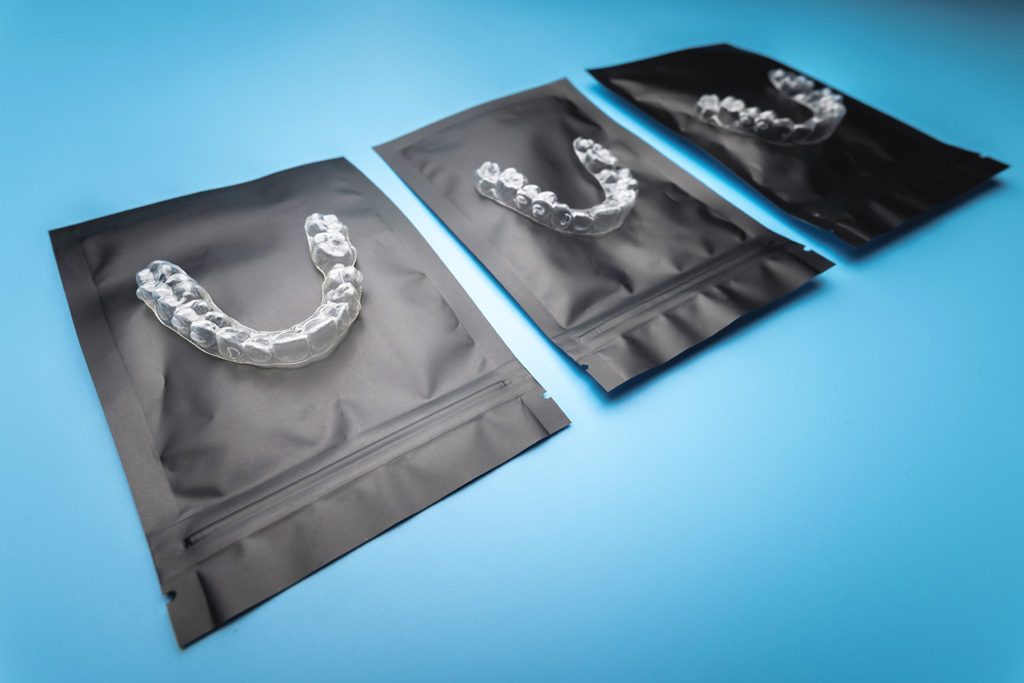
Turning 40 often comes with a strange kind of honesty. You stop making excuses for the things you have put off for years, and a crooked smile you have quietly disliked for the last 20 years tends to rise to the top of that list. Maybe braces were never in the budget when you were younger, or your teeth have simply shifted with time, crowding in ways they never used to. Whatever the reason, the same question tends to surface: is it too late to do anything about it now?
The truth is that adult orthodontics has changed dramatically, and clear aligners have made straightening your teeth later in life easier than ever. At Newport Beach Dental Center, we see patients in their 40s, 50s, and beyond who assumed orthodontic treatment was a chapter of life they had already missed, but it is not. Age alone does not disqualify you from a straighter smile, and for most adults, clear aligners are a practical and discreet way to finally address it and renew your confidence.
Why Age Is Not the Barrier You Think It Is
Teeth can move at any age as long as the surrounding gum tissue and bone are healthy. What matters far more than your birth year is the condition of your periodontal support. Adults sometimes assume that because their bone is fully mature, their teeth will not respond to gentle pressure the way a teenager’s would. In practice, tooth movement works the same way biologically at 45 as it does at 15, though we do pay closer attention to gum health, bite alignment, and any prior dental work before recommending treatment.
A recent comparative study on aligner outcomes across age groups found that treatment accuracy in adults was comparable to that of teenage patients, reinforcing that mature dentition is not the limiting factor many people assume it to be, according to research published by the National Institutes of Health. What we look for instead are things like receding gums, old restorations, or signs of bite strain, since these can shape how we plan your treatment rather than whether we recommend it at all.
What Makes Aligners a Good Fit for Adult Schedules?
One of the biggest reasons adults choose clear aligners over traditional braces is how easily they fit into an already full life. You are not managing a household, a career, and metal brackets all at once. The trays are removable, clear, and require far fewer in-office adjustments than braces did in years past.
Aligners have many benefits for adults over 40, including:
They are nearly invisible, so colleagues and clients rarely notice you are in treatment.
You remove them to eat, so there are no food restrictions to plan around.
Brushing and flossing stay exactly the way you already do them.
Office visits are spaced further apart, which suits a packed calendar.
Many bite and spacing issues respond well even when treatment starts later in life.
That last point matters for anyone who has lived with a shifting bite for years. Aligners are not just cosmetic. When your bite is out of alignment, it can affect chewing, jaw comfort, and how evenly your teeth wear over time, so correcting it can carry advantages that go well beyond appearance.
What Changes When You Start Treatment Later in Life?
A More Thorough Starting Point
Before recommending aligners for a specific bite concern, we start with a full evaluation of your gum health and any existing dental work, including crowns, bridges, or old fillings that may need to be accounted for in your treatment plan. This step is more important for adult patients simply because there has been more time for these factors to develop.
Realistic Expectations Around Timing and Care
Treatment length varies based on how much movement your teeth need, and we walk through that timeline with you before you commit to anything. We also go over daily care for your aligners so they stay clear and comfortable throughout treatment, along with what to expect around cost and how clear aligner pricing in Newport Beach typically breaks down.
Newport Beach Dental Center Is Ready When You Are
Under the care of Dr. Laura Sharbash, a Fellow of the Academy of General Dentistry, our team takes a conservative, biomimetic approach to every case, which means we recommend treatment based on what your teeth and gums actually need rather than a generic one-size-fits-all plan. If you have spent years wondering whether it is too late to straighten your smile, we would rather you ask us directly than keep guessing on your own.
There is no ideal age for wanting a smile you feel good about, and 40 is not a cutoff for anything. Reach out to our contact form to schedule a consultation and find out what clear aligners could look like for you.
It is one of the first questions people ask when they start thinking seriously about straightening their teeth, and it is a fair one. Clear aligners represent a real financial commitment, and knowing what goes into the price helps you plan more confidently and avoid surprises along the way. The short answer is that costs vary quite a bit depending on the complexity of your case, the technology involved, and how your treatment is monitored. The longer answer involves a few factors worth understanding before your first consultation.
Newport Beach Dental Center offers clear aligner treatment for patients throughout the Newport Beach area, guided by Dr. Laura Sharbash, DDS, FAGD, D.ABDSM, and her commitment to precise, conservative care. If you are wondering whether clear aligners are the right fit for your smile and your budget, we are happy to walk through everything with you at your consultation. Our clear aligners page gives a fuller picture of what treatment looks like and who may be a good candidate.
What Is the Typical Cost Range for Clear Aligners?
Clear aligner costs in the United States vary widely based on case complexity, the level of clinical oversight involved, and the technology used throughout treatment. Demand for the treatment has grown considerably in recent years. A peer-reviewed study published in NIH’s National Library of Medicine projects the global clear aligner market to grow from $3.1 billion in 2021 to $11.6 billion by 2027, driven largely by increased patient demand for aesthetic orthodontic options.
In a market like Newport Beach, treatment fees reflect the level of clinical oversight, technology, and personalization involved. At our practice, we work to keep clear aligner treatment accessible and straightforward to budget for, and we are happy to walk through the numbers in detail during your consultation so there are no surprises.
What Factors Influence the Price of Clear Aligners?
Several variables shape what you will ultimately pay, and understanding them helps set realistic expectations going into your consultation.
Case Complexity
Case complexity is the most significant factor. Minor spacing or crowding issues require fewer trays and a shorter treatment timeline, while more involved misalignment or bite correction cases call for more trays, more planning, and often more refinements. The length of treatment directly affects the overall cost, which is why two patients at the same practice can have meaningfully different fees. If a bite concern is part of your situation, our guide to fixing specific bite issues with clear aligners covers how severity is generally categorized.
Level of Clinical Monitoring
Treatment provided and overseen by a trained dentist, with regular progress checks and the ability to course-correct as needed, carries more value than mail-order or minimally supervised alternatives. At Newport Beach Dental Center, we integrate ProMonitoring, an FDA-cleared, AI-driven remote monitoring platform that allows Dr. Sharbash to track your progress at every aligner change and engage with your treatment between in-office visits. That oversight means issues can be identified and addressed early, reducing the need for costly corrections later.
Length of Treatment
Cost and duration are closely linked. Our clear aligner treatment timeline guide walks through the stages a typical case moves through, from the initial consultation to retention, so you can see where the bulk of the investment tends to fall.
Does Insurance Cover Clear Aligners?
Many dental insurance plans that include orthodontic benefits will apply those benefits to clear aligner treatment the same way they apply them to traditional braces. Coverage varies significantly by plan, but patients with orthodontic benefits may see anywhere from $1,000 to $3,000 applied toward their treatment cost, depending on their plan’s lifetime orthodontic maximum. Our team is happy to help you understand your insurance benefits and how they apply to your specific treatment plan. We recommend reviewing your policy for orthodontic coverage details and bringing any questions to your consultation so we can help you piece together the full financial picture.
Are There Other Ways to Manage the Cost?
For patients without orthodontic coverage or those whose benefits do not cover the full amount, there are several options worth exploring. Many practices, including ours, offer financing arrangements that spread the cost over monthly payments. Patients who prefer not to rely on traditional insurance may also want to ask about our in-house membership plan during their consultation.
Health Savings Accounts and Flexible Spending Accounts can also be used for orthodontic treatment. According to the IRS’s Publication 502 on medical and dental expenses, orthodontic treatment generally qualifies as an eligible expense under these accounts, which can offer a tax-advantaged way to offset costs. We recommend confirming the specifics with your plan administrator, since account rules can vary.
During your general dentistry visit or clear aligner consultation, our team can walk through the options available to you and help you find an approach that fits your situation.
Schedule Your Consultation at Newport Beach Dental Center
The best way to get an accurate cost estimate is to come in for a consultation, where Dr. Sharbash can evaluate your case, discuss the complexity involved, and walk you through a treatment plan with clear pricing. Dr. Laura Sharbash, DDS, FAGD, D.ABDSM, brings a Fellowship from the Academy of General Dentistry and a Diplomate credential from the American Board of Dental Sleep Medicine to every patient interaction, reflecting the kind of advanced clinical training that leads to more predictable outcomes.
If you are ready to find out what clear aligners would look like for your smile, we would love to connect. Request an appointment online, and our team will reach out to get you scheduled.
Frequently Asked Questions About Clear Aligner Costs
Why does clear aligner pricing vary so much between patients?
Pricing reflects case complexity, the number of aligners required, the level of clinical monitoring involved, and the length of treatment. A patient with minor spacing issues will typically pay less than a patient whose case involves bite correction, additional attachments, or a longer treatment timeline.
Is a consultation required before I can get a price quote?
Yes. Because cost depends so heavily on individual case complexity, an accurate quote requires a consultation that includes digital scans and a bite evaluation. This lets Dr. Sharbash assess your specific situation and walk you through pricing that reflects your actual treatment plan rather than a generic estimate.
Does my dental insurance cover clear aligners the same way it covers braces?
Many plans with orthodontic benefits apply those benefits to clear aligners the same way they would to traditional braces, though coverage amounts vary by plan and lifetime orthodontic maximum. Reviewing your policy ahead of your consultation helps our team give you the clearest financial picture.
Can I use my HSA or FSA to pay for clear aligners?
Orthodontic treatment, including clear aligners, generally qualifies as an eligible expense under Health Savings Accounts and Flexible Spending Accounts. Since plan rules can differ, it is worth confirming the details with your account administrator before your consultation.
What if I do not have insurance or my coverage does not fully apply?
Financing arrangements that spread payments out monthly are available, and our in-house membership plan is another option worth asking about during your consultation. Our team can walk through what fits your budget once your treatment plan is finalized.
You committed to the process. You are wearing your trays consistently, switching on schedule, and checking in as directed. That dedication matters, and it is doing real work toward the smile you are working for. But here is the part that sometimes gets glossed over in the initial excitement: how you care for your aligners between wears makes a meaningful difference in both the success of your treatment and the health of your teeth along the way. The good news is that proper aligner maintenance is genuinely straightforward once you know what to do and, just as importantly, what to avoid.
At Newport Beach Dental Center, we want our clear aligner patients to feel confident not just about their treatment plan, but about the day-to-day habits that support it. Whether you are just getting started or a few trays in, this guide covers everything you need to keep your aligners clean, clear, and working the way they should. Our clear aligners page covers the full scope of what treatment looks like from start to finish if you are still weighing your options.
Why Aligner Care Matters More Than You Might Think
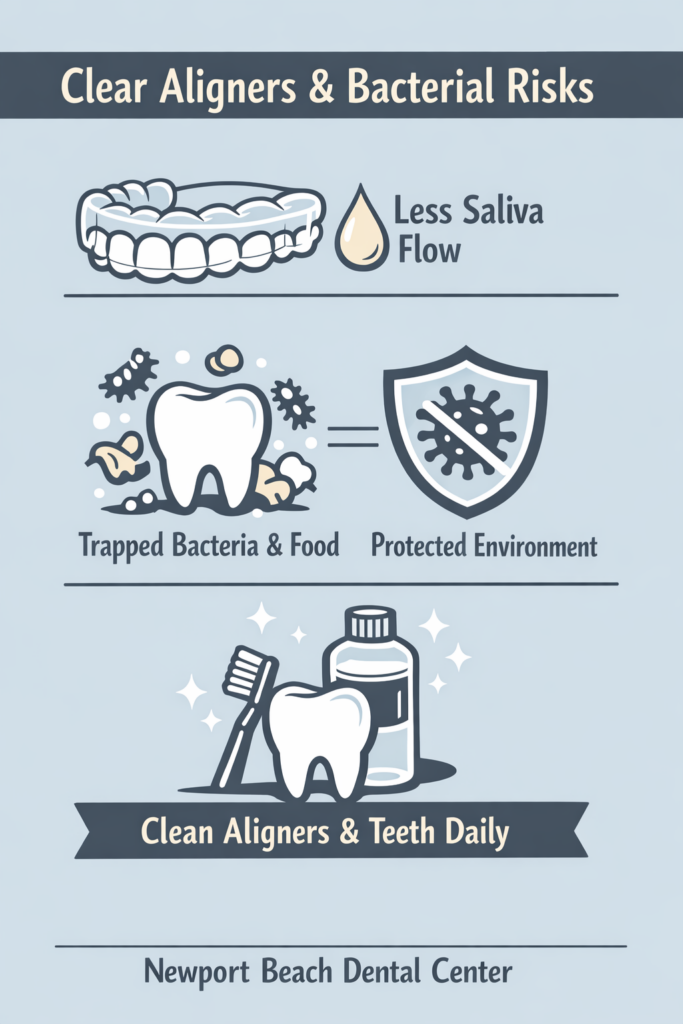
Clear aligners do not just sit passively on your teeth. Because they fit snugly over the entire tooth surface, they also limit how much saliva reaches your enamel throughout the day. Research published by the American Dental Association notes that aligners significantly reduce saliva’s natural ability to rinse away microorganisms and protect against microbial pathogens. That means bacteria and food debris left on either your teeth or your trays have a more protected environment to work in, which raises the stakes for consistent cleaning.
This is not a reason to worry. It is a reason to be intentional. A few minutes of care each day keeps the bacterial environment in check and protects both your aligners and your enamel throughout treatment.
How to Clean Your Aligners Properly
Cleaning your aligners does not require a complicated routine, but it does require consistency.
Daily Rinsing and Brushing
The most reliable approach is rinsing your aligners with lukewarm water every time you remove them, followed by a gentle brushing with a soft-bristled toothbrush and a small amount of clear, unscented soap. Avoid toothpaste for this step, most formulas contain abrasive particles that scratch the tray surface over time, creating grooves where bacteria accumulate. A clear antibacterial soap or an aligner-specific cleaning product will do the job without the wear.
Soaking
A daily soak in a diluted solution of equal parts water and hydrogen peroxide, or a dedicated aligner cleaning tablet, helps maintain tray clarity and freshness. Avoid mouthwash with artificial dyes, as these can tint the plastic and undermine the subtle appearance that makes aligners appealing in the first place.
Eating, Drinking, and Aligners Away From Home
One of the biggest adjustments in the first few weeks is remembering to take your aligners out before you eat or drink anything besides plain water. It sounds simple, but it takes a new habit to stick. A few practical routines make it easier to stay consistent once you are out of the house, at work, or traveling.
Carry a Hard-Sided Aligner Case
A sturdy, vented case is the single most useful accessory you can add to your routine. Wrapping aligners in a napkin and setting them on a restaurant table is how most lost or damaged trays happen. Keep a case in your bag, your car, and your desk drawer so there is never an excuse to skip it.
Pack a Travel Cleaning Kit
A travel-sized cleaning kit, a small toothbrush, clear soap, and your case, takes up almost no space and means you are never stuck improvising with whatever is available. If you are flying, pack your kit in your carry-on rather than checked luggage, since temperature swings in a cargo hold can warp the plastic.
What Not to Do With Your Aligners
A few habits are responsible for most preventable aligner damage, and knowing them upfront saves real trouble down the line. The following are the ones worth keeping top of mind:
Never rinse or soak aligners in hot water, which warps the plastic and disrupts how the tray fits against your teeth.
Do not eat or drink anything other than plain water while wearing your trays, as food and acidic beverages trapped beneath the plastic accelerate staining and decay.
Avoid leaving aligners out uncovered, which increases bacterial contamination while they are not in use.
Skip colored or scented soaps, which leave residue and odor inside the tray.
Staying consistent with these four points eliminates the most common sources of tray damage throughout treatment.
Caring for Your Teeth While in Treatment
Before putting your trays back in after eating or drinking, brush and floss thoroughly. Placing aligners over teeth that have not been cleaned traps bacteria and food against the enamel for hours, significantly raising the risk of cavities and white spot lesions. Staying current with general dentistry visits during treatment is also essential, as professional cleanings address buildup in areas that are harder to reach during active aligner use.
If you experience dry mouth during treatment, staying hydrated and asking us about fluoride treatments as a protective measure is worth a conversation.
When to Call Your Dentist Between Visits
Most day-to-day aligner concerns can wait until your next scheduled check-in, but a few situations are worth a call sooner rather than later: a tray that cracks or develops a sharp edge, a persistent sore spot that does not settle after a few days, or an aligner that suddenly feels loose partway through its two-week cycle. Catching these early keeps small issues from turning into setbacks in your treatment timeline.
How ProMonitoring Supports Your Treatment
One of the advantages of our clear aligner program is the integration of ProMonitoring, an FDA-cleared, AI-driven remote monitoring platform that allows Dr. Sharbash to track your progress at every aligner change. Through ProMonitoring’s patient engagement features, including messaging and notification tools, you stay connected to your care team between appointments. That means potential fit or progress issues can be identified and addressed early rather than waiting until your next scheduled visit.
You can learn more about how this technology works on our ProMonitoring page.
Good habits matter most once treatment is underway, but they are only part of the picture. If you are still deciding whether aligners are the right path, our comparison of clear aligners and traditional braces can help, and if a specific bite concern is part of what brought you here, we cover which issues aligners can address in our guide to fixing bite problems with clear aligners. Patients budgeting for treatment can also review our clear aligner cost guide for what typically factors into pricing in Newport Beach.
Get the Most Out of Your Treatment at Newport Beach Dental Center
Your clear aligner treatment is a real investment in your smile, and small daily habits protect that investment at every step. Dr. Laura Sharbash, DDS, FAGD, D.ABDSM, and our team are here to support you through every tray change, and we welcome questions at any point throughout your treatment.
If you have concerns about your aligner fit, your oral health during treatment, or anything else along the way, do not wait to reach out. Request an appointment online and our team will be happy to connect with you.
Frequently Asked Questions About Caring for Clear Aligners
How often should I clean my clear aligners?
Clean your aligners every time you remove them, and plan on a more thorough soak once a day. Rinsing alone after meals is not enough on its own, since it does not remove the biofilm that builds up on the plastic over several hours.
Can I use mouthwash to clean my aligners?
Regular mouthwash is fine for rinsing your mouth, but avoid soaking the aligners themselves in colored or dyed mouthwash, since the pigment can stain the clear plastic over time. A diluted hydrogen peroxide soak or an alcohol-free, clear antibacterial rinse is a safer choice for the trays.
What should I do if my aligners start to smell or look cloudy?
Cloudiness or odor usually means bacteria or dried saliva has built up on the tray. Try a longer soak in a diluted hydrogen peroxide solution and a gentle brush with clear soap. If the cloudiness does not clear up or the tray develops a persistent odor, bring it up at your next appointment.
Is it safe to drink coffee or tea with my aligners in?
Plain water is the only beverage recommended while your aligners are in place. Coffee, tea, and other colored or acidic drinks can stain the plastic and get trapped against your teeth, so remove your trays first and brush before putting them back in.
How do I care for my aligners while traveling?
Pack a hard-sided case and a small cleaning kit in your carry-on rather than checked luggage, since extreme temperatures can warp the plastic. Stick to your regular rinsing and soaking routine as closely as possible, and bring your next few sets of aligners with you so a schedule change does not interrupt your progress.
If you have been scanning before-and-after photos of straight, well-balanced smiles, you may be wondering whether clear aligners could work for your crooked canines, your overbite, or whatever bite concern has been on your mind. The answer is usually yes, though it depends on what is actually happening with your bite. Clear aligners have advanced well beyond simple crowding correction, and today they can address a wide range of bite issues, from overbites and underbites to crossbites, open bites, and deep bites.
At Newport Beach Dental Center, Dr. Laura Sharbash combines her Fellowship in the Academy of General Dentistry with advanced clear aligner technology to help patients work toward healthier, more balanced bites. She uses ProMonitoring, an FDA-cleared remote monitoring system that provides digital oversight at every aligner change, so she can track progress and address concerns before they become bigger issues.
What Bite Issues Can Clear Aligners Correct?
Clear aligners apply gentle, controlled pressure to shift teeth into better positions over time, which makes them a viable option for several categories of bite problems.
Overbite
An overbite occurs when the upper teeth extend too far over the lower teeth, which can contribute to jaw discomfort and extra wear on the front teeth over time. Clear aligners can move the upper and lower teeth into better alignment, gradually reducing this overlap for many mild to moderate cases.
Deep Bite
A deep bite is closely related to an overbite but refers specifically to excessive vertical overlap, where the upper front teeth cover too much of the lower front teeth when the mouth is closed. Left unaddressed, a deep bite can accelerate wear on the lower teeth and add strain around the jaw joint. Aligners correct deep bites by intruding the front teeth or extruding the back teeth to open the bite gradually, though more pronounced cases may take longer and often benefit from added attachments.
Underbite
Underbites happen when the lower teeth sit in front of the upper teeth, often making chewing and speaking more difficult. Mild to moderate underbites tend to respond well to aligner therapy, which repositions the lower teeth back and the upper teeth forward to improve the relationship between the arches. More significant underbites, particularly those tied to jaw size or position rather than tooth position alone, may need a broader treatment plan.
Crossbite
Crossbites develop when some of the upper teeth sit inside the lower teeth rather than outside, which can lead to uneven wear and gum recession over time. Clear aligners can widen the arch and reposition the affected teeth, correcting mild to moderate crossbites without brackets or wires.
Open Bite
An open bite creates a gap between the upper and lower front teeth even when the mouth is fully closed, which can make biting into certain foods difficult and is often linked to prolonged thumb-sucking or tongue thrusting in childhood. Clear aligners close this gap by moving teeth vertically, and a recent scientific review found that clear aligner therapy can be an effective option for managing anterior open bite in adult patients when treatment is properly planned and monitored.
Crowding and Spacing
Crowding happens when the teeth overlap or twist because the jaw does not have enough room, while spacing issues leave noticeable gaps between teeth. Both conditions respond well to clear aligner treatment and are often among the more predictable movements aligners can achieve.
Midline Discrepancy
A midline discrepancy occurs when the center line between the upper front teeth does not line up with the center line between the lower front teeth, which can affect both the appearance of a smile and how the back teeth meet when biting down. Clear aligners can shift individual teeth to correct minor midline shifts, though larger discrepancies tied to jaw structure may need to be addressed as part of a broader treatment plan.
Bite Issues and Jaw Strain
Some of the bite issues above, particularly deep bites, crossbites, and pronounced overbites, can contribute to added strain on the jaw joint over time, alongside the wear-and-tear concerns already mentioned. If jaw discomfort, clicking, or stiffness is part of what you are noticing along with your bite concern, our TMJ treatment page covers how we evaluate and manage those symptoms, which is typically addressed as its own line of care alongside any orthodontic treatment.
How Severity Affects Your Treatment Options
Not every bite problem is the same, and the extent of the misalignment plays a major role in determining whether clear aligners alone can address it.
Minor bite issues: Your teeth are only slightly out of position, and you typically achieve excellent results with aligner therapy alone. These cases take anywhere from six months to a year to complete.
Moderate bite problems: These require more complex tooth movements but still fall within the capabilities of modern clear aligners. Your treatment might last twelve to eighteen months, and your dentist will closely monitor your treatment timeline to make any necessary adjustments.
Severe bite issues: These involve significant jaw misalignment and may need a combined approach. In severe cases, you might benefit from orthodontic treatment that incorporates other techniques alongside aligners, or in rare instances, surgical intervention before starting aligner therapy.
Attachments, Elastics, and What the Research Shows
Advancements in clear aligner technology have expanded what is possible without metal brackets and wires. Attachments, small tooth-colored bumps bonded to certain teeth, give aligners a better grip and more control for challenging movements. Elastics, small rubber bands worn with the aligners, can help correct the relationship between the upper and lower jaws in bite cases.
Clinical research supports this expanded role. A systematic review comparing clear aligners to fixed appliances found that aligners can produce results comparable to braces for many malocclusion cases, though braces may still have an edge for certain complex movements, such as controlling tooth torque or achieving specific occlusal contacts. This is one reason Dr. Sharbash evaluates each bite individually rather than assuming a single approach fits every case.
According to the American Association of Orthodontists, approximately one in three orthodontic patients today is an adult, showing that it is never too late to address bite issues and work toward a healthier smile.
The ProMonitoring Difference
Traditional orthodontic treatment often requires frequent office visits to check progress, but ProMonitoring changes this dynamic. This AI-driven platform allows for digital oversight at every aligner change, reducing the need for in-office checks while supporting treatment outcomes. You use a smartphone to photograph your teeth as you switch to each new aligner, and the ProMonitoring system analyzes your progress from there.
This technology offers several benefits. Early problem detection means your dentist can identify and address issues before they require major adjustments, which can help avoid the need for refinement trays. You will make fewer trips to the office while still receiving attentive care, and the messaging and notification features help keep you engaged with your treatment plan throughout the process.
Caring for Your Aligners During Bite Correction
Bite correction cases often involve attachments, elastics, or a longer wear schedule, which makes consistent aligner care especially important. Wearing your aligners for the recommended twenty to twenty-two hours a day keeps treatment on track, since bite-related movements typically need steady, uninterrupted pressure to progress as planned.
Our complete aligner maintenance guide covers cleaning, storage, and troubleshooting in more detail, but the basics matter most for bite cases: rinse your aligners each time you remove them, brush and floss before reinserting them, and avoid eating or drinking anything besides water while they are in place. Skipping these steps can slow progress or affect how attachments bond to your teeth.
Timeline and Cost Considerations for Bite Correction
Because bite correction can involve additional attachments, elastics, or a longer wear schedule than cosmetic-only cases, treatment length and total investment can vary more than they would for simple crowding or spacing. Several factors play into this, including the type of bite issue, its severity, and how consistently the aligners are worn.
If you are budgeting for treatment, our clear aligner cost guide breaks down what typically factors into pricing in Newport Beach, so you can go into your consultation with a clearer picture of what to expect.
Getting Straighter Teeth With Newport Beach Dental Center
Whether you are dealing with crowding, spacing, or a specific bite problem, clear aligners with ProMonitoring technology may help you work toward the smile you have been wanting. Dr. Sharbash brings a holistic, minimally invasive approach to orthodontic care, drawing on her Diplomate status with the American Board of Dental Sleep Medicine and her Fellowship in the Academy of General Dentistry. She also serves as an official spokesperson for the AGD and sits on the Southern California AGD board, bringing perspective from her work in dental education and leadership.
During your consultation, Dr. Sharbash will evaluate your bite, take digital scans of your teeth, and discuss whether clear aligners can help you reach your goals. Schedule your appointment to learn more about clear aligners with ProMonitoring technology.
Frequently Asked Questions About Clear Aligners and Bite Correction
Can clear aligners correct a bite problem without braces?
In many mild to moderate cases, yes. Clear aligners can address overbites, underbites, crossbites, open bites, and crowding without brackets or wires, sometimes with the help of attachments or elastics for added control. Severe bite issues tied to jaw size or position may need a combined approach, so a dental evaluation is the best way to know which category your bite falls into.
How long does bite correction with clear aligners usually take?
Treatment length depends on the type and severity of the bite issue. Minor cases often resolve in six months to a year, moderate cases typically take twelve to eighteen months, and more complex cases can take longer, especially when attachments, elastics, or additional planning are involved.
Will I need attachments or elastics to fix my bite?
Many bite correction cases use small tooth-colored attachments or rubber band elastics to help move teeth in ways clear plastic trays cannot achieve on their own. Not every case requires them, and your dentist will determine whether they are needed based on your specific bite and treatment goals.
Can severe bite issues be treated with clear aligners alone?
Some severe bite issues, particularly those involving significant jaw misalignment, may need an approach that combines aligners with other orthodontic techniques or, in rare cases, surgical evaluation before treatment begins. A consultation with digital scans is the most reliable way to determine the right plan.
Can fixing my bite also help with jaw pain or TMJ symptoms?
Bite correction can reduce added strain on the jaw joint in some cases, particularly when a deep bite, crossbite, or overbite is contributing to uneven pressure. TMJ symptoms often have several contributing factors, so a separate evaluation is usually needed to determine whether jaw-specific treatment is also appropriate alongside aligner therapy.
How do I find out if clear aligners can fix my specific bite?
The most reliable way is a consultation that includes a bite evaluation and digital scans of your teeth. This allows your dentist to assess the type and severity of your bite issue and recommend whether clear aligners alone, aligners with attachments, or an alternative approach is the best fit.
Owner, Newport Beach Dental Center | Fellow, Academy of General Dentistry
Dr. Sharbash owns and practices at Newport Beach Dental Center, a practice with roots in the Newport Beach community since 1985. She holds a Fellowship in the Academy of General Dentistry and Diplomate status with the American Board of Dental Sleep Medicine, and she serves as an official spokesperson for the AGD and on the Southern California AGD board.
Getting a straighter smile has never been more convenient than it is today. The introduction of FDA-cleared, AI-powered remote monitoring systems like ProMonitoring has changed how patients and dental professionals track progress throughout clear aligner treatment. Think of it as a personal orthodontic assistant that travels with you, helping you stay on course while you go about your daily life.
At Newport Beach Dental Center, we offer this technology because we know how busy life can get. Dr. Sharbash and our team want patients to reach their treatment goals without the hassle of constant office visits. With ProMonitoring, you get the professional oversight you need along with the freedom to live your life on your own schedule.
How ProMonitoring Technology Works
The ProMonitoring system is straightforward to use. You receive a ScanBox Pro device along with a mobile app that guides you through each scan step by step. These scans capture detailed images every 7 to 14 days, allowing the AI system to evaluate your progress without requiring a visit to the office, and each scan can generate as many as 130 oral observations.
The artificial intelligence looks at how well your clear aligners are fitting, how clean you are keeping your teeth, and whether you are staying on track with your treatment plan. If something looks off, our team receives an alert so we can reach out and help you get back on course, rather than waiting until your next scheduled appointment to catch it.
Your phone becomes a helpful check-in tool, sending reminders and tips to keep your progress moving forward. The app can also flag when a minor adjustment to your routine may help you get the most out of your treatment.
Why Patients Are Choosing Remote Monitoring
Remote monitoring with ProMonitoring can reduce in-office aligner checks by up to 89% compared to traditional orthodontic treatment, giving patients flexibility without sacrificing professional oversight. This means you can focus on the rest of your life while still getting consistent, monitored care.
Here is what makes patients appreciate this technology:
Life stays normal: Take your progress scans at home on your own schedule.
No more guessing: Get feedback about how treatment is progressing instead of waiting weeks to find out.
Ongoing connection: Message our team through the app whenever you have questions.
Better quality outcomes: Catching minor issues early can support smoother progress toward your results.
Documented progress: Track your transformation with detailed progress records over time.
You still receive the personal attention and professional care you would expect from in-office visits, just delivered in a way that fits into a busy schedule.
What Makes This Different From Traditional Orthodontic Monitoring?
Scheduling orthodontic appointments around work meetings and school events used to be part of the process. ProMonitoring changes that by giving patients live feedback and guidance while giving our team the tools to review progress and address potential issues remotely.
The FDA clearance means this technology has met defined standards for safety and performance. Instead of waiting to find out how things are going between appointments, you get regular check-ins that keep you and our team informed about your progress.
Patients often say they feel more involved in their own care with this approach. You are not just a passive participant. You are an active part of your care team, receiving regular updates and staying connected between visits.
Is ProMonitoring Right for Your Treatment Plan?
ProMonitoring is designed to support a wide range of clear aligner cases, but the right monitoring approach still depends on the complexity of your bite and treatment goals. During your consultation, Dr. Sharbash reviews your specific situation and lets you know whether remote monitoring can serve as your primary check-in method or whether a mix of remote scans and in-person visits makes more sense for your case.
How often will I need to visit the office if I use ProMonitoring?
Visit frequency varies by case, but many patients on ProMonitoring see a significant reduction in the number of in-office aligner checks compared to traditional monitoring. Our team still schedules periodic in-person visits to confirm fit and progress, with the exact schedule set during your consultation based on your treatment plan.
What happens if the ProMonitoring app flags an issue with my aligners?
If the AI system detects something that needs attention, our team reviews the scan and reaches out to discuss next steps. Depending on the concern, this may mean an adjustment to your at-home routine or scheduling an in-office visit so we can take a closer look before continuing.
Can I still see my dentist in person if I use remote monitoring?
Yes. ProMonitoring supplements in-person care rather than replacing it. You can request or schedule an office visit at any point during treatment, and our team will still recommend periodic visits to confirm your progress in person alongside your remote scans.
How accurate is AI-powered remote monitoring compared to in-person checks?
The ProMonitoring system is FDA-cleared and captures dozens of oral observations per scan, giving our team detailed data to evaluate between visits. It is designed to work alongside, not instead of, professional review, and any finding that needs closer attention is confirmed with an in-person evaluation.
Does ProMonitoring work with any type of clear aligner treatment?
ProMonitoring is compatible with a wide range of clear aligner cases, though the right monitoring schedule depends on the complexity of your treatment plan. Dr. Sharbash determines during your consultation whether remote monitoring can serve as your primary check-in method for your specific case.
Your Smile Journey Starts at Newport Beach Dental Center
Dr. Laura Sharbash is a Fellow of the Academy of General Dentistry and a Diplomate of the American Board of Dental Sleep Medicine, bringing advanced training in modern dental technology to every patient’s care. Our practice has been part of the Newport Beach community since 1985, and we have watched many smiles transform over the years using tools like ProMonitoring to make the process more convenient.
We would love to show you how this technology can make your clear aligner journey smoother and more convenient. Reach out through our contact form to schedule a consultation where we can talk about your smile goals and show you exactly how ProMonitoring works.
Embarking on your clear aligner journey is an exciting step toward achieving the smile you’ve always wanted. At Newport Beach Dental Center, we use advanced ProMonitoring technology to guide you through this transformation efficiently and with fewer office visits. This guide walks through what to expect at each stage, from your first consultation through long-term retention. If you have not yet decided whether clear aligners are the right fit, that page covers candidacy and treatment basics in more depth.
Initial Consultation (Week 0)
Your journey begins with a comprehensive consultation with Dr. Laura Sharbash. During this appointment, we’ll:
Discuss your smile goals and concerns
Take digital scans, photographs, and possibly X-rays of your teeth
Assess whether you’re an ideal candidate for clear aligners
Address any questions about the ProMonitoring system
Review treatment costs and flexible payment options
This initial visit allows us to create a customized treatment plan specifically designed for your unique dental anatomy and goals. If a bite concern is part of what brought you in, our guide on clear aligners and specific bite issues covers how severity affects your options before you even get to this appointment.
Treatment Planning Phase (Weeks 1-3)
Once your records are complete, Dr. Sharbash will develop your personalized treatment plan. Using advanced 3D imaging technology, we’ll create a digital simulation showing the gradual movement of your teeth throughout treatment. You’ll be able to preview your future smile before treatment even begins.
During this phase, we’ll:
Create a digital model of your current teeth
Design a step-by-step plan for tooth movement
Manufacture your custom set of clear aligners
Prepare any attachments that may help with specific tooth movements
Aligner Delivery & Training (Week 4)
When your first set of aligners is ready, you’ll return to our Newport Beach office for a delivery appointment. This important visit includes:
Fitting your first set of aligners
Placement of any small tooth-colored attachments that help with specific movements
Instructions on how to insert and remove your aligners properly
Training on the ProMonitoring app and how to submit your digital scans
Guidelines for wearing (22+ hours daily) and caring for your aligners
A schedule for advancing to your next sets of aligners
Our complete aligner care guide goes deeper into daily cleaning and handling habits if you want to get ahead of this step.
Initial Adaptation Period (Weeks 4-6)
The first few weeks with your new aligners require some adjustment. You may experience:
Mild discomfort or pressure as your teeth begin to shift
A slight speech adjustment period (typically resolving within days)
Getting accustomed to the routine of removing aligners for eating and drinking anything besides water
Learning to maintain excellent oral hygiene by brushing and flossing after meals
Most patients adapt quickly to their new routine and find the aligners far more comfortable than traditional braces. If you are still weighing the two options, our comparison of clear aligners versus traditional braces walks through the day-to-day differences in more detail.
Active Treatment Phase (Months 2-12)
The length of your active treatment will depend on the complexity of your case, but typically ranges from 6-18 months. During this phase:
You’ll change to new aligners approximately every 1-2 weeks, as directed
You’ll submit regular digital scans through the ProMonitoring app, allowing Dr. Sharbash to track your progress remotely
You’ll have fewer in-office appointments (typically every 8-12 weeks) compared to traditional orthodontics
You’ll gradually notice improvements in your smile alignment
You’ll maintain excellent oral hygiene throughout treatment
One of the significant advantages of the ProMonitoring system is that Dr. Sharbash can monitor your progress virtually between office visits. If she notices any concerns, she’ll reach out proactively instead of waiting until your next scheduled appointment.
Why Your Timeline May Differ From Someone Else’s
It is common to compare notes with a friend or coworker who also wore aligners and wonder why your treatment is taking longer or moving faster than theirs. Case complexity is the biggest variable: minor spacing or crowding typically resolves faster than a bite correction case involving attachments or elastics. A 2024 narrative review published in Cureus found that consistent wear, at least 20 to 22 hours a day, along with regular follow-up examinations, has a direct impact on how predictably and stably treatment progresses. Skipping wear time or delaying scans through the ProMonitoring app is one of the most common reasons a timeline stretches beyond its original estimate.
If your case involves a specific bite issue such as an overbite, crossbite, or open bite, our guide to correcting bite problems with clear aligners explains how those cases are typically categorized and what that can mean for your timeline.
Progress Check Appointments (Every 8-12 Weeks)
Throughout your treatment, you’ll have periodic in-office visits where we’ll:
Check that your teeth are moving according to plan
Make adjustments to your treatment if necessary
Replace or add attachments as needed
Address any questions or concerns you may have
These appointments are typically quick and straightforward, especially when ProMonitoring has allowed us to track your progress remotely.
Refinement Phase (If Needed)
Sometimes teeth don’t move exactly as planned, or you might decide you’d like to make additional improvements. In these cases, we may recommend a refinement phase:
New digital scans will be taken
Additional aligners will be created to achieve the desired results
Treatment will continue for a few more weeks or months
The ProMonitoring system is particularly valuable during this phase, as it helps identify the need for refinements earlier, potentially reducing the total treatment time.
Completion & Retention (Final Appointment)
Once your treatment is complete and you’re satisfied with your results:
We’ll remove any attachments from your teeth
We’ll take final records to document your new smile
We’ll fit you with custom retainers to maintain your results
We’ll provide detailed instructions on wearing and caring for your retainers
Retention Phase (Lifetime)
The retention phase is an important part of maintaining your new smile for the long term:
Initially, you’ll wear your retainers full-time (except when eating or drinking) for about 1-3 months
After the initial period, you’ll transition to nighttime wear
Long-term, most patients wear retainers at night indefinitely to help prevent teeth from shifting
Follow-Up Care
We recommend periodic retainer check appointments to help ensure everything remains in proper alignment. Most patients:
Return for a check-up one month after completing treatment
Schedule annual retainer checks thereafter
Replace retainers every 1-3 years due to normal wear
Your Newport Beach Advantage
At Newport Beach Dental Center, our ProMonitoring clear aligner system offers several advantages over traditional clear aligner treatments:
Digital oversight at every aligner change
Early identification of any tracking issues
Potential for fewer in-office visits
Ability to preempt refinements
Enhanced communication through the app
Potentially shorter overall treatment time
Once you have a sense of the timeline, budgeting is usually the next question. Our clear aligner cost guide breaks down what typically factors into pricing in Newport Beach, so you can go into your consultation with a clearer picture of what to expect.
Ready to Start Your Journey?
Every smile transformation journey is unique, and your specific timeline may vary based on your individual needs. For a personalized assessment of what to expect with clear aligner treatment, schedule a consultation with Dr. Laura Sharbash at Newport Beach Dental Center.
Frequently Asked Questions About the Clear Aligner Timeline
How long does clear aligner treatment usually take?
Most patients complete treatment in six to eighteen months, depending on case complexity. Minor spacing or crowding tends to resolve on the shorter end of that range, while bite correction or more involved cases typically take longer.
How many aligners will I need over the course of treatment?
The number of trays depends entirely on your treatment plan. Most patients change to a new aligner every one to two weeks, so a case lasting twelve months might involve roughly twenty-six to thirty sets, though this varies by individual case.
Can I speed up my clear aligner timeline?
Consistent wear is the biggest factor within your control. Wearing your aligners for the recommended twenty to twenty-two hours a day and submitting your ProMonitoring scans on schedule helps keep treatment on track and reduces the chances of needing extra refinement trays that extend the timeline.
What happens if I miss wearing my aligners for a day or two?
An occasional missed hour here or there is unlikely to derail your progress, but repeated gaps in wear time can slow tooth movement or cause your current aligner to stop fitting properly. If this happens, reach out to our team through the ProMonitoring app rather than skipping ahead to the next tray.
Do I still need to wear a retainer after my aligner treatment ends?
Yes. Retainers help hold your teeth in their new positions after active treatment ends. Most patients wear retainers full-time for the first one to three months, then transition to nighttime wear, often indefinitely, to help prevent teeth from gradually shifting back.
Professional and over-the-counter whitening both rely on peroxide, but they differ in three ways that matter: how much active ingredient the product contains, how it is delivered to your teeth, and whether anyone checks your teeth before you start. Professional in-office gels use hydrogen peroxide concentrations of roughly 25 to 40 percent, applied under a dentist’s supervision with your gums protected. Store-bought strips and kits typically contain about 3 to 10 percent, applied with a one-size-fits-all fit. Whitening toothpastes mostly work differently altogether, by polishing away surface stain rather than bleaching.
At Newport Beach Dental Center, Dr. Laura Sharbash, DDS, FAGD, D.ABDSM, provides professional teeth whitening with Opalescence Boost and Pola Office, and she is happy to talk through the store-bought products patients bring in. This post explains the chemistry and how to read a whitening label. For the safety side of the question, see is professional teeth whitening safe, and for local options, costs, and timing, see professional vs. at-home whitening in Newport Beach.
How Peroxide Whitening Works
Teeth whitening works by breaking down stains that have accumulated in your teeth over time, from food and drinks like coffee, tea, wine, and berries, tobacco use, aging, certain medications, and genetics. Peroxide molecules are small enough to pass through the enamel. Once inside, they release reactive oxygen that splits large, dark pigment molecules into smaller ones that reflect more light, so the tooth looks lighter.
Two ingredients do most of this work. Hydrogen peroxide acts quickly. Carbamide peroxide is a more stable compound that breaks down into hydrogen peroxide and urea, releasing its whitening power more slowly. Both professional and over-the-counter products use these same agents, so the real differences come down to strength, contact, and control.
Peroxide Concentration: What the Percentages Mean
The number on a whitening label only makes sense once you know which peroxide it refers to. According to the American Dental Association, carbamide peroxide releases about one-third of its content as hydrogen peroxide. A 30 percent carbamide peroxide gel is therefore roughly equivalent to 10 percent hydrogen peroxide, and a 10 percent carbamide gel works out to roughly 3 to 3.5 percent hydrogen peroxide.
3 to 10%
Typical hydrogen peroxide range in store-bought strips and kits
25 to 40%
Typical hydrogen peroxide range in professional in-office gels
About 1/3
Share of carbamide peroxide released as hydrogen peroxide
Why Stronger Isn’t Automatically Better
Higher concentrations whiten faster, but they are also more likely to cause sensitivity and gum irritation if they are not controlled. That is why the strongest gels are reserved for in-office use, where contact time is measured, the gums are shielded, and a dentist watches how your teeth respond. At home, the safer route is a lower concentration used in a well-fitting tray, which is why dentist-supplied touch-up gels are gentler than in-office formulas.
Why Weaker Isn’t Automatically Safer
A lower-strength product used carelessly can still cause trouble. Strips left on longer than directed, gel pooled against the gums in a loose tray, or back-to-back boxes used without a break can all irritate tissue and leave teeth sensitive. Concentration is only one part of the safety picture.
Delivery and Contact Time: The Overlooked Difference
Peroxide can only whiten where it touches, and only for as long as it stays in place. Professional whitening controls both. In-office gel is painted onto each tooth and reapplied as needed, and custom trays hold gel evenly against every surface. Store-bought products vary widely in how well they manage this, as the comparison below shows.
Product Type
How It Works
Main Limitation
Whitening strips
Low-strength peroxide on a thin film
Misses curves and crowded teeth
Boil-and-bite or stock trays
Gel held in a generic tray
Loose fit lets gel reach gums
Paint-on gels and pens
Thin peroxide layer brushed on
Saliva washes it off quickly
LED light kits
Low-strength gel plus a light
Limited evidence the light adds much
Whitening toothpaste and rinses
Mostly abrasives; some add a little peroxide
Surface stain only; brief contact
Whitening toothpastes deserve a special note. The ADA explains that they rely primarily on abrasives to remove surface stains, and some contain low levels of peroxide. They can be useful for maintaining a result, but they don’t change the tooth’s underlying shade the way bleaching does.
What the ADA Seal of Acceptance Tells You
The ADA Seal of Acceptance is a voluntary program for over-the-counter oral care products. A whitening toothpaste or whitening strip that carries the Seal has shown the ADA that it meets the program’s requirements for safety and effectiveness when used as directed. If you are shopping the drugstore aisle, the Seal is the most reliable quick check available.
Two points often surprise patients. First, many whitening products on the shelf and online do not carry the Seal at all, so the absence of a Seal is common and does not by itself mean a product is unsafe, only that it has not been through that review. Second, professional products dispensed or applied by dentists are not eligible for the Seal. Their safety comes from the exam, the controlled application, and the dentist’s oversight instead.
What Professional Whitening Adds Beyond Stronger Gel
Professional teeth whitening offers several advantages that have nothing to do with the percentage on the syringe. Dr. Sharbash uses whitening agents with stronger concentrations than those sold over the counter, and she pairs them with safeguards that a retail product can’t include.
Pre-Treatment Exam
Before beginning any whitening procedure, Dr. Sharbash examines your teeth and gums. This step identifies underlying issues, like cavities or gum disease, that need to be addressed first. It also tells her whether whitening is appropriate for your type of discoloration, since not all stains respond. Store-bought products can’t tell you that gray staining from medication or trauma will barely budge, or that a front crown won’t change color.
Controlled In-Office Application
In-office whitening typically delivers dramatic results in one visit. A barrier protects your gums, the gel is applied tooth by tooth, and the process is monitored the whole time. Neither of our systems requires a UV light. Opalescence Boost is chemically activated and contains potassium nitrate to reduce sensitivity, while Pola Office is a fast-acting formula with built-in desensitizing agents. Most patients see an improvement of six to eight shades after one in-office session, compared with the two to three shades typically seen from store-bought options, though your result depends on your starting shade and stain type.
Custom Trays for Maintenance
For patients who want to keep results going at home, Dr. Sharbash can provide custom-fitted trays with professional-strength gel. Because the trays are shaped to your teeth, the gel stays in even contact with the enamel and away from your gums, which is the main thing store-bought trays can’t guarantee.
Safety Considerations and Results
While over-the-counter products are generally safe when used as directed, they carry more risk when misused. Without professional guidance, some people overuse these products, which can lead to increased sensitivity, gum irritation, or wear on the enamel surface. The ADA notes that sensitivity with strip and tray products can develop within the first few days of use and usually resolves within a few days after treatment ends.
In terms of results, professional whitening typically produces a more noticeable and more even change. With good habits and periodic touch-ups, results can last from about six months to two years. Results from store-bought products tend to be more modest and more temporary, often requiring ongoing use to maintain even small improvements. If you have already tried several products without success, the stain may be intrinsic, and an exam can tell you whether whitening, white spot removal, or veneers is the better fit.
Schedule Your Professional Whitening Consultation at Newport Beach Dental Center
Dr. Laura Sharbash, DDS, FAGD, D.ABDSM, is a Fellow of the Academy of General Dentistry, a distinction earned by fewer than 6 percent of general dentists in the United States, and she practices with a conservative, biomimetic philosophy. You can learn more about her training on her doctor profile page, and the benefits of professional teeth whitening are worth a look if you are still weighing your options.
If you would like help choosing between professional whitening and the products in your cabinet, bring them to your visit and we will review them with you. To learn more about our whitening services and the best approach for your unique situation, schedule a consultation through our contact form.
Frequently Asked Questions About OTC and Professional Whitening
What is the difference between hydrogen peroxide and carbamide peroxide?
Hydrogen peroxide is the active whitening agent and works quickly. Carbamide peroxide breaks down into hydrogen peroxide and urea, releasing about one-third of its content as hydrogen peroxide, so it works more slowly. That is why a carbamide peroxide percentage looks higher on a label than the equivalent hydrogen peroxide strength.
Are whitening strips with the ADA Seal safe to use?
Products with the ADA Seal of Acceptance have shown the ADA that they meet its requirements for safety and effectiveness when used as directed. Following the package instructions exactly still matters, and it is a good idea to have a dental checkup first so cavities or gum problems are treated before you whiten.
Do whitening toothpastes actually whiten teeth?
Whitening toothpastes mainly remove surface stains with mild abrasives, and some add a small amount of peroxide. They can brighten teeth a little and help maintain professional results, but they do not change the underlying color of the tooth the way a bleaching gel does.
Do LED whitening lights make store-bought kits work better?
The evidence that consumer LED lights add much to low-strength gels is limited. Most of the whitening comes from the peroxide itself, so contact time, fit, and concentration matter more than the light. Neither of the in-office systems we use requires a UV light.
Why don’t professional whitening products carry the ADA Seal?
The ADA Seal program is designed for over-the-counter products that people use on their own. Whitening products dispensed by a dentist for home use or applied in the office are classified as professional products and are not eligible. With professional whitening, the dentist’s exam and supervision provide the safety oversight.
When people think about clear aligners, they typically focus on the aesthetic improvement—achieving that perfectly aligned smile. However, the advantages of straightening your teeth with systems like ProMonitoring extend far beyond just appearances.
Improved Oral Health
One of the most significant benefits of straightening your teeth is the improvement in your overall oral health. Crowded or misaligned teeth create hard-to-reach spaces where food particles and bacteria can accumulate. These areas are challenging to clean effectively, even with diligent brushing and flossing, leading to an increased risk of tooth decay and gum disease.
When your teeth are properly aligned, brushing and flossing become more effective. You can clean all surfaces of your teeth more thoroughly, significantly reducing plaque buildup. This improved oral hygiene directly translates to healthier gums, fewer cavities, and fresher breath.
Enhanced Jaw Function and Reduced Wear
Did you know that misaligned teeth can cause uneven pressure distribution when you bite and chew? This imbalance may lead to excessive wear on certain teeth, causing them to become flat, chipped, or cracked over time. Additionally, an improper bite can strain your jaw joints and muscles, potentially resulting in temporomandibular joint (TMJ) disorders.
Clear aligners work to correct your bite alignment, ensuring that pressure is distributed evenly across all your teeth when you chew. This not only preserves the integrity and longevity of your teeth but also helps prevent painful jaw-related issues that can significantly impact your quality of life.
Potential Sleep Benefits
Emerging research suggests a connection between teeth alignment and sleep quality. When teeth are misaligned, it can affect the positioning of your jaw and potentially impact your airways. In some cases, particularly with bite issues that cause the lower jaw to sit further back, there may be a narrowing of the airways that contributes to snoring or even sleep-disordered breathing.
While clear aligners are not a treatment for sleep apnea or other sleep disorders, correcting dental alignment may help improve airway positioning for some individuals, potentially leading to better sleep quality. For those with both dental alignment issues and sleep concerns, a comprehensive evaluation by both a dental professional and sleep specialist is advisable.
Speech Improvement
Your teeth play a crucial role in speech formation. Certain misalignments, especially in the front teeth, can affect your ability to pronounce specific sounds clearly. Gaps between teeth, overbites, and underbites can all contribute to speech impediments like lisping or whistling when speaking.
Clear aligner therapy gradually shifts your teeth into proper alignment, potentially improving speech clarity. Many patients report noticing clearer pronunciation as their treatment progresses, which can boost confidence in professional and social situations.
Digestive Health Benefits
The digestive process begins in your mouth, where proper chewing breaks down food into smaller pieces that are easier for your body to digest. Misaligned teeth can compromise your ability to chew food thoroughly, which may lead to larger food particles entering your digestive system, potentially causing digestive discomfort or inefficient nutrient absorption.
When your teeth are properly aligned, you can chew more efficiently, allowing for better digestion and potentially reducing issues like indigestion or bloating related to inadequately chewed food.
Psychological Well-Being
While the cosmetic improvement of aligned teeth certainly contributes to increased confidence, the psychological benefits extend beyond merely looking better. When you’re no longer self-conscious about your teeth, you may smile more frequently and openly—and smiling itself has been linked to improved mood, reduced stress levels, and even strengthened immune function.
Additionally, addressing oral health issues and preventing potential complications can reduce anxiety about future dental problems, contributing to an overall sense of well-being and peace of mind.
The ProMonitoring Advantage
At Newport Beach Dental Center, our ProMonitoring clear aligner system offers all these benefits while adding the advantages of remote monitoring. The system’s FDA-cleared platform allows Dr. Sharbash to oversee your treatment progress digitally between office visits, ensuring optimal results with fewer in-person appointments.
Conclusion
Clear aligners offer a comprehensive approach to improving not just your smile’s appearance, but your overall health and quality of life. From enhanced oral hygiene and reduced tooth wear to improved jaw function and potential sleep benefits, straightening your teeth can have far-reaching positive effects.
If you’re considering clear aligner therapy, schedule a consultation with Dr. Laura Sharbash at Newport Beach Dental Center to discuss how treatment could benefit your specific situation. Experience the transformative effects of a healthier, properly aligned smile that goes far beyond aesthetics.
A teenager’s smile is a big part of their confidence, but dealing with bulky metal braces can feel like a real obstacle. Whether it is yearbook photos, social events, or everyday conversations, the last thing most teens want is a mouth full of brackets and wires. Clear aligners offer a modern, flexible way to straighten teeth discreetly without the hassle of traditional braces.
At Newport Beach Dental Center, we know that teens and young adults want a confident smile without the difficulties of traditional braces. That is why we offer ProMonitoring clear aligners, an advanced, nearly invisible way to straighten teeth while maintaining comfort and flexibility. Dr. Laura Sharbash, DDS, FAGD, D.ABDSM, brings extensive training in modern dental technologies to create customized clear aligner treatment plans that address each patient’s unique needs. If you are looking for a discreet and convenient way to work toward a healthier, more aligned smile, we are here to help.
Why Clear Aligners Are an Excellent Option for Teens and Young Adults
A straight, confident smile can make a real difference for teens and young adults navigating school, social situations, and new relationships. Traditional metal braces have been the primary option to straighten teeth for decades, but ProMonitoring clear aligners have become popular for several reasons. Here are eight benefits of clear aligners for teens and young adults.
1. Nearly Invisible
One of the biggest reasons teens and young adults prefer clear aligners is their discreet appearance. Unlike traditional braces with metal brackets and wires, clear aligners are made of transparent plastic that fits snugly over the teeth. This makes them nearly invisible, which can help teens feel more confident in social interactions, whether they are taking photos, speaking in class, or going out with friends.
2. No Dietary Changes
With traditional braces, certain foods that could damage brackets or get stuck in wires are generally off-limits, including popcorn, chewy candy, and gum. Clear aligners are removed while eating, so there is no need to avoid the foods you enjoy. You simply take them out, eat, brush your teeth, and put them back in.
3. Improved Comfort
Metal braces can sometimes cause discomfort when brackets and wires rub against the inside of the mouth, which can lead to irritation. Clear aligners are made of smooth plastic and custom-fitted to the teeth to reduce this risk. There may be some mild pressure when starting a new aligner tray as the teeth shift, but the overall experience is typically more comfortable than traditional braces.
4. Ability to Play Sports
Clear aligners offer a real advantage for teens and young adults involved in sports. Traditional braces carry a higher risk of causing injury during contact sports. Clear aligners can be removed during play and replaced afterward, letting your teen focus on their performance without worrying about damaging their braces or their mouth.
5. Faster Treatment in Many Cases
Clear aligners can sometimes work faster than traditional braces, depending on the severity of the orthodontic issue being addressed. While braces typically require 18 to 24 months of treatment, some clear aligner cases can see results in as little as 6 to 12 months. This timeframe varies from person to person and depends heavily on wearing the aligners for the recommended 20 to 22 hours each day.
6. Versatility
Clear aligners are not just for minor orthodontic issues. While they are best suited for mild to moderate conditions, they can also address concerns like overbite, underbite, gaps, and crowding. Some orthodontic problems are too severe to be treated with clear aligners alone and may require traditional braces to fully correct, which is why a proper evaluation matters before starting treatment.
7. Easier to Maintain Oral Health
One downside of traditional braces is how difficult they can be to clean thoroughly with brushing and flossing. Food particles often get stuck around brackets and wires, which can increase the risk of gum irritation and tooth decay. Clear aligners make oral hygiene simpler, since they can be removed to brush and floss normally, which helps keep teeth and gums healthier throughout treatment.
8. Fewer Trips to the Orthodontist
Another benefit of ProMonitoring clear aligners is the reduced need for frequent orthodontic visits. Traditional braces require regular adjustments and multiple appointments, which can be difficult for teens and young adults with busy schedules. With clear aligners, patients typically receive multiple trays at once to change at home according to their treatment plan, with occasional check-ins as needed.
The ProMonitoring Difference: Advanced Aligner Technology
ProMonitoring clear aligners represent a meaningful advancement in orthodontic treatment technology. This FDA-cleared remote monitoring system creates a more efficient and convenient experience for teens and young adults through its AI-driven platform. You can learn more about how the scanning and review process works in our overview of the FDA-cleared ProMonitoring system.
The technology enables our team to track treatment progress remotely at every aligner change, identifying potential issues early without requiring frequent in-office visits. Key benefits include:
Digital oversight: Frequent digital monitoring reduces the need for in-office aligner checks.
Early problem detection: Issues are identified at every aligner change, often preventing the need for refinements.
Patient engagement: Interactive features keep teens connected to their treatment progress.
Reduced office visits: Save time for both teens and parents.
More predictable outcomes: Early intervention supports steadier progress toward the treatment goal.
A more convenient experience: Treatment fits more easily into an active lifestyle.
What Parents Should Know Before Starting Treatment
Parents often want to understand how clear aligner treatment fits into a teen’s day-to-day life before committing. Consistency matters most: aligners only work as intended when worn for the recommended hours each day, so it helps to build simple habits around meals, brushing, and swapping trays on schedule. Many families also want a sense of the full picture before starting, including how clear aligner costs compare to traditional braces and what the treatment timeline typically looks like from the first scan to the final results.
If your teen is weighing clear aligners against traditional braces, our comparison of clear aligners versus traditional braces breaks down the practical differences to help your family make an informed decision together.
Frequently Asked Questions About Clear Aligners for Teens
What age can a teen start clear aligner treatment?
Most teens can begin clear aligner treatment once their permanent teeth have largely come in, which is often assessed during a routine dental checkup. Because every mouth develops differently, the right starting point depends on an evaluation of your teen’s individual bite and dental development rather than age alone.
Will my teen remember to wear their aligners enough?
Consistency is the biggest factor in successful clear aligner treatment, and ProMonitoring helps by tracking progress between visits so our team can flag concerns early. Building simple daily habits, such as wearing aligners immediately after meals and brushing, helps teens stay on track without much extra effort.
Can clear aligners fix more than crooked teeth?
Clear aligners can address a range of alignment concerns beyond crowding, including certain gaps, overbites, and underbites of mild to moderate severity. More complex bite issues may require traditional braces or a combination of treatments, which is why a full evaluation is an important first step.
How do clear aligners compare in cost to traditional braces?
Cost depends on the complexity of the case and length of treatment, and clear aligners can be comparable to traditional braces for many patients. Our team reviews the specifics with your family during a consultation so you have a clear picture before deciding on a treatment path.
Do clear aligners require special cleaning?
Clear aligners should be rinsed and brushed gently each time they are removed, and soaked periodically in a cleaning solution recommended by our team. Avoiding hot water, which can warp the plastic, and keeping aligners in their case when not worn helps them stay clear and functional throughout treatment.
Trust Newport Beach Dental Center for Your Teen or Young Adult’s Clear Aligner Needs
A straight, confident smile should not come with unnecessary hassle. At Newport Beach Dental Center, we offer ProMonitoring clear aligner treatment designed to fit into your teen’s or young adult’s lifestyle. Our approach is tailored to each patient’s unique needs, aiming for effective results with maximum comfort, and our team is here to guide your family through every step of the process.
If you are considering clear aligners for your teen or young adult, we are ready to help you take the next step. Schedule a consultation today by filling out our contact form.
Cookie Consent
We use cookies to improve your experience on our site. By using our site, you consent to cookies.
Cookie Preferences
Manage your cookie preferences below:
Essential cookies enable basic functions and are necessary for the proper function of the website.
Name
Description
Duration
Cookie Preferences
This cookie is used to store the user's cookie consent preferences.
30 days
Cookie Preferences
This cookie is used to store the user's cookie consent preferences.
30 days
Geolocation Config
This cookie is used to store the consent settings based on the visitor's location.
30 days
Geolocation Config
This cookie is used to store the consent settings based on the visitor's location.
30 days
Geolocation Config
This cookie is used to store the consent settings based on the visitor's location.
30 days
Cookie Preferences
This cookie is used to store the user's cookie consent preferences.
30 days
CloudFlare provides web performance and security solutions, enhancing site speed and protecting against threats.
Whether a CAPTCHA or Javascript challenge has been solved.
session
_cfuvid
The _cfuvid cookie is only set when a site uses this option in a Rate Limiting Rule, and is only used to allow the Cloudflare WAF to distinguish individual users who share the same IP address.
session
__cflb
When enabling session affinity with Cloudflare Load Balancer, Cloudflare sets a __cflb cookie with a unique value on the first response to the requesting client. Cloudflare routes future requests to the same origin, optimizing network resource usage. In the event of a failover, Cloudflare sets a new __cflb cookie to direct future requests to the failover pool.
session
__cf_bm
Cloudflare's bot products identify and mitigate automated traffic to protect your site from bad bots. Cloudflare places the __cf_bm cookie on End User devices that access Customer sites that are protected by Bot Management or Bot Fight Mode. The __cf_bm cookie is necessary for the proper functioning of these bot solutions.
session
__cfruid
Used by the content network, Cloudflare, to identify trusted web traffic.
session
cf_chl_rc_m
These cookies are for internal use which allows Cloudflare to identify production issues on clients.
session
cf_chl_rc_ni
These cookies are for internal use which allows Cloudflare to identify production issues on clients.
session
cf_chl_rc_i
These cookies are for internal use which allows Cloudflare to identify production issues on clients.
session
__cfwaitingroom
The __cfwaitingroom cookie is only used to track visitors that access a waiting room enabled host and path combination for a zone. Visitors using a browser that does not accept cookies cannot visit the host and path combination while the waiting room is active.
session
cf_use_ob
The cf_use_ob cookie informs Cloudflare to fetch the requested resource from the Always Online cache on the designated port. Applicable values are: 0, 80, and 443. The cf_ob_info and cf_use_ob cookies are persistent cookies that expire after 30 seconds.
session
cf_ob_info
The cf_ob_info cookie provides information on: The HTTP Status Code returned by the origin web server. The Ray ID of the original failed request. The data center serving the traffic
session
__cfseq
Sequence rules uses cookies to track the order of requests a user has made and the time between requests and makes them available via Cloudflare Rules. This allows you to write rules that match valid or invalid sequences. The specific cookies used to validate sequences are called sequence cookies.
session
These cookies are needed for adding comments on this website.
Name
Description
Duration
comment_author_url
Used to track the user across multiple sessions.
Session
comment_author_email
Used to track the user across multiple sessions.
Session
comment_author
Used to track the user across multiple sessions.
Session
Google reCAPTCHA helps protect websites from spam and abuse by verifying user interactions through challenges.
Name
Description
Duration
_GRECAPTCHA
Google reCAPTCHA sets a necessary cookie (_GRECAPTCHA) when executed for the purpose of providing its risk analysis.
179 days
Google Tag Manager simplifies the management of marketing tags on your website without code changes.
Name
Description
Duration
td
Registers statistical data on users' behaviour on the website. Used for internal analytics by the website operator.
session
cookiePreferences
Registers cookie preferences of a user
2 years
Statistics cookies collect information anonymously. This information helps us understand how visitors use our website.
Name
Description
Duration
calltrk_fcid
-
calltrk_landing
6 months
calltrk_nearest_tld
10 years
calltrk_referrer
6 months
calltrk_session_id
-
Name
Description
Duration
_clck
-
_clsk
24 hours
Google Analytics is a powerful tool that tracks and analyzes website traffic for informed marketing decisions.
Used to monitor number of Google Analytics server requests when using Google Tag Manager
1 minute
_gid
ID used to identify users for 24 hours after last activity
24 hours
_gali
Used by Google Analytics to determine which links on a page are being clicked
30 seconds
_ga
ID used to identify users
2 years
__utmx
Used to determine whether a user is included in an A / B or Multivariate test.
18 months
__utmv
Contains custom information set by the web developer via the _setCustomVar method in Google Analytics. This cookie is updated every time new data is sent to the Google Analytics server.
2 years after last activity
__utmz
Contains information about the traffic source or campaign that directed user to the website. The cookie is set when the GA.js javascript is loaded and updated when data is sent to the Google Anaytics server
6 months after last activity
__utmc
Used only with old Urchin versions of Google Analytics and not with GA.js. Was used to distinguish between new sessions and visits at the end of a session.
End of session (browser)
_gac_
Contains information related to marketing campaigns of the user. These are shared with Google AdWords / Google Ads when the Google Ads and Google Analytics accounts are linked together.
90 days
__utmb
Used to distinguish new sessions and visits. This cookie is set when the GA.js javascript library is loaded and there is no existing __utmb cookie. The cookie is updated every time data is sent to the Google Analytics server.
30 minutes after last activity
__utmt
Used to monitor number of Google Analytics server requests
10 minutes
__utma
ID used to identify users and sessions
2 years after last activity
Marketing cookies are used to follow visitors to websites. The intention is to show ads that are relevant and engaging to the individual user.
Google Maps is a web mapping service providing satellite imagery, real-time navigation, and location-based information.