
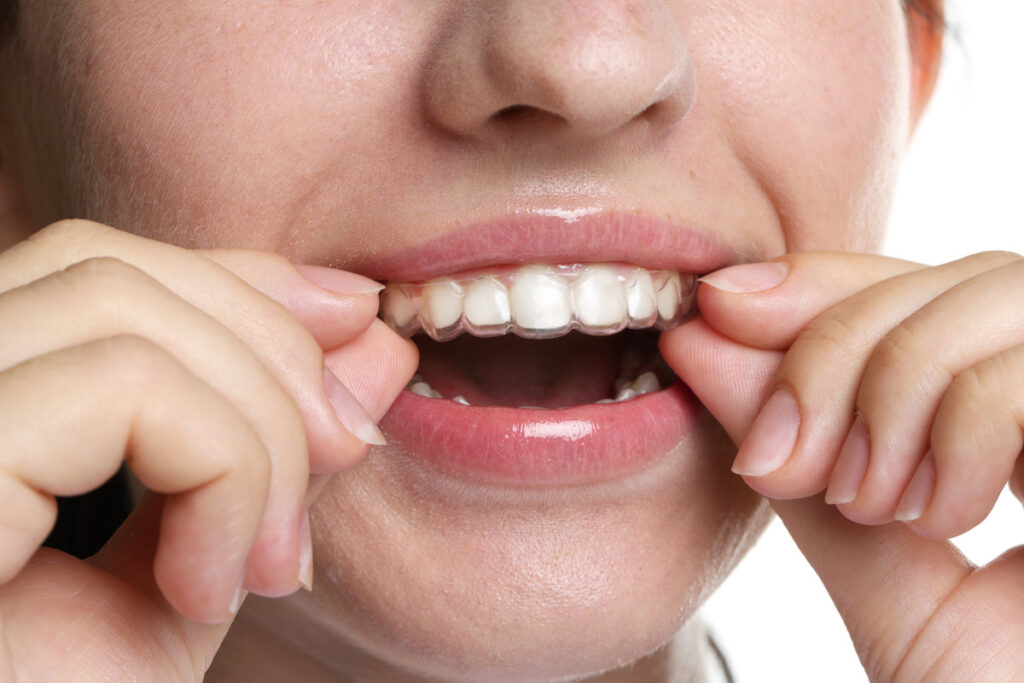
ProMonitoring changes clear aligner treatment by moving routine progress checks from the dental chair to regular at-home scans that your dentist reviews between visits. Instead of learning at an appointment weeks later that an aligner stopped fitting, your dental team can see it within days and decide what to do: keep going, stay in the current aligner a little longer, adjust your habits, or bring you in. The technology does not replace your dentist. It gives your dentist more frequent, better information to make treatment decisions with.
At Newport Beach Dental Center, Dr. Laura Sharbash, DDS, FAGD, D.ABDSM, uses ProMonitoring as part of our clear aligner therapy. If you want the basics of the system, including the scanning device, scan schedule, and patient FAQs, start with our overview of the FDA-cleared ProMonitoring system. This post goes a step further and looks at what happens after you hit send: what your dentist is looking for, how those reviews shape your treatment, and what remote monitoring can and cannot do.
Why Aligner Treatment Benefits From Closer Monitoring
Clear aligners move teeth in small, planned steps, and each aligner assumes the one before it did its job. When an aligner stops fitting snugly, often called poor tracking, the teeth fall behind the plan. Keep switching trays anyway and the gap grows, which can mean extra aligners, a mid-course correction, or a longer timeline.
Traditional aligner care relies on scheduled in-office checkups every several weeks, so a tracking problem can go unnoticed for a while. A 2023 review in the National Center for Biotechnology Information database reported that clear aligner therapy has an average success rate of 80 to 90 percent for mild to moderate tooth movements, while noting that results vary by case and that fixed braces still offer more predictability for complex movements. Catching small deviations early is one practical way to keep an aligner case on the predictable side of that range.
What Happens Between Your Scan and Your Next Aligner
Each check-in follows the same basic path. You scan at home on the schedule your team sets, typically every 7 to 14 days, and the information moves through two layers of review before a decision reaches you.
The important part is step three. Automated analysis is good at noticing change across many images, but it does not know your full history, your bite, or why a particular tooth was planned to move a certain way. Dr. Sharbash and our team make the call.
What Your Dentist Looks For in Each Scan
Every review comes back to a few core questions about whether treatment is on track. Here is what the team is checking:
- Aligner fit: Whether the tray is fully seated or showing small gaps at the edges of certain teeth.
- Tooth tracking: Whether each tooth is keeping pace with the digital plan or starting to lag.
- Oral hygiene: Signs of plaque buildup or gum inflammation that can develop under trays.
- Scan consistency: Whether scans are arriving on schedule, which also hints at how consistently aligners are being worn.
No single scan tells the whole story. The value comes from seeing a sequence of scans over time, which makes it easier to tell a one-off bad photo from a real trend.
How Remote Reviews Change Treatment Decisions
Remote monitoring is most useful when it leads to a specific, timely decision. Common outcomes after a review include the following.
Moving to the Next Aligner on Schedule
When fit and tracking look good, you get the go-ahead to switch. Many patients find this reassuring, because they no longer have to guess whether they are ready for the next tray.
Staying in the Current Aligner a Little Longer
If a tooth is lagging slightly, the team may ask you to wear the current aligner for a few extra days so it can catch up. This small adjustment can keep a minor issue from compounding across several trays.
Adjusting Your Routine
Sometimes the fix is behavioral: more consistent wear time, using aligner seating aids, or cleaning more thoroughly around certain teeth. Our clear aligner care guide covers the daily habits that keep trays fitting well.
Scheduling an In-Person Visit
When a scan suggests something that needs hands-on attention, such as a persistent fit problem or gum irritation, we bring you in. Seeing it early often means the visit is shorter and the fix simpler than if it had waited until the next routine appointment.
What Remote Monitoring Can’t Replace
Remote scans are a powerful supplement, but some parts of dental care still require you to be in the chair. The comparison below shows where each fits.
That is why remote monitoring works best inside a practice that also provides your general dentistry care. Your aligner progress, cleanings, X-rays, and any cosmetic enhancements are coordinated by the same team, so tooth movement is considered alongside your bite, gum health, and overall treatment plan rather than in isolation.
Your Role in Getting the Most From ProMonitoring
The system is only as good as the information it receives. Scanning on schedule, following the app’s prompts so each image is clear, and wearing your aligners for the hours your plan calls for all make each review more useful. If you are unsure whether a tray fits, say so in the app instead of waiting for your next visit.
Patients who get the most from remote monitoring treat it as a two-way conversation. The messaging feature exists so questions about wear time, discomfort, or a lost tray can be answered quickly, which helps you stay motivated and informed throughout treatment.
Who Benefits Most From ProMonitoring
Busy professionals appreciate the flexibility. If your work schedule makes regular office visits challenging, remote monitoring keeps treatment progressing without constant disruptions. The same goes for parents juggling multiple responsibilities, college students home only on breaks, and anyone who values their time. People with anxiety about dental visits also find comfort in fewer routine appointments, since much of the monitoring happens from home.
Patients who live elsewhere in Orange County may benefit too. While some visits remain necessary, remote monitoring reduces how often you need to make the drive. If you are still deciding whether aligners fit your situation, our posts on whether clear aligners can fix your bite issue, the clear aligner treatment timeline, and the cost of clear aligners in Newport Beach are good next reads.
Experience ProMonitoring at Newport Beach Dental Center
Dr. Sharbash incorporates ProMonitoring into her approach to clear aligner therapy. As a Fellow of the Academy of General Dentistry and a Diplomate of the American Board of Dental Sleep Medicine, she brings advanced training and a conservative, biomimetic philosophy to every case. You can read more about her background on her doctor profile page.
Ready to explore how ProMonitoring could fit your aligner treatment? Contact our practice to schedule a consultation. We’ll evaluate your smile, discuss your goals, and let you know whether remote monitoring is a good fit for your case.
Frequently Asked Questions About Remote Aligner Monitoring
What does “poor tracking” mean with clear aligners?
Poor tracking means one or more teeth are not moving as fast as the treatment plan expects, so the aligner no longer fits snugly. It often shows up as a small gap between the tray and the tooth. Caught early, it can often be corrected by wearing the current aligner longer or improving wear time.
Does a person review my scans or only the AI?
The AI screens the images and flags possible concerns, and our dental team reviews those findings against your treatment plan. Decisions about switching aligners, staying in a tray longer, or coming in for a visit are made by your dental team, not the software alone.
Can remote monitoring shorten my treatment?
It may help keep treatment on schedule by catching fit problems before they turn into extra aligners or a mid-course correction. Treatment length still depends mainly on how much movement your case requires and how consistently you wear your aligners, so no monitoring system can guarantee a shorter timeline.
Will I still need X-rays and cleanings during aligner treatment?
Yes. Remote scans cannot take X-rays, detect cavities between teeth, or remove tartar. Keep your regular cleanings and exams during treatment so your teeth and gums stay healthy while they move.
What should I do if I miss a scheduled scan?
Complete the scan as soon as you can and keep wearing your current aligner until you hear back, rather than switching to the next tray on your own. If you are traveling or having trouble with the app, message our team so we can adjust your schedule.