
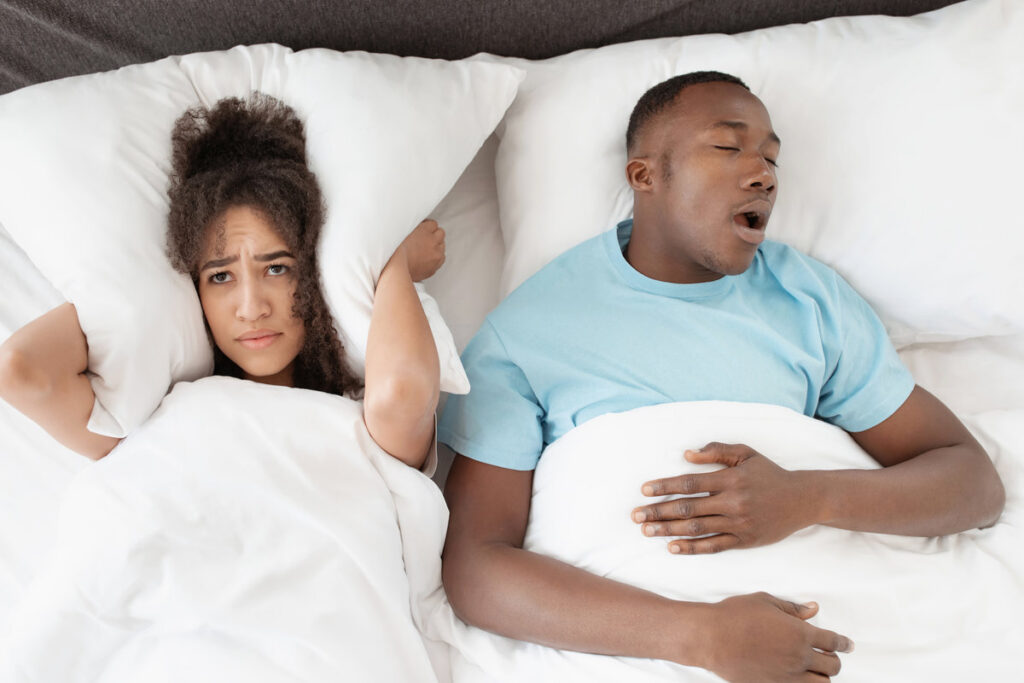
If you wake up with a sore jaw, a dull headache, or worn-down teeth and can’t figure out why, your mouth may not be the only one to blame. Teeth grinding, known clinically as bruxism, and obstructive sleep apnea often show up together, and researchers believe your body may be clenching and grinding as a reaction to breathing interruptions you never consciously notice.
At Newport Beach Dental Center, we help patients untangle these overlapping symptoms so you get to the root cause instead of just treating the surface damage. We look beyond a cracked filling or a sore jaw to ask whether your airway, not just your bite, is driving the problem, and our obstructive sleep apnea treatment options reflect that approach.
What Is Obstructive Sleep Apnea?
Obstructive sleep apnea, or OSA, happens when the soft tissue in the back of your throat relaxes and blocks your airway during sleep. Each blockage forces your body to briefly wake up just enough to reopen the airway, repeatedly throughout the night without you even realizing it.
These repeated awakenings fragment your sleep cycle and starve your body of restorative rest, which is why catching the warning signs early matters tremendously.
Why Grinding and OSA Often Overlap
A 2025 systematic review published in the Journal of Clinical Medicine found bruxism occurs in 8% to 31% of the general population, but its prevalence was consistently higher in patients diagnosed with obstructive sleep apnea, suggesting the two conditions may be connected, though researchers note the exact relationship is still unclear. The same review associates OSA with reduced quality of life, hypertension, and increased cardiovascular risk.
One leading theory suggests grinding acts as a protective reflex, with jaw muscle activity that may help reopen a partially collapsed airway. Another theory points to the brief arousals your brain experiences during a breathing pause, which may trigger the muscle activity that shows up as grinding. For these reasons, grinding can be a potential red flag for an undiagnosed airway problem, not just a stress habit on its own.
Signs Your Grinding Might Be Airway Related
Not every case of bruxism points to obstructive sleep apnea, but certain patterns raise the likelihood. Loud snoring, gasping during sleep, morning headaches, and daytime drowsiness alongside your grinding are worth bringing up at your next visit. You can find out more about the risks of ignoring obstructive sleep apnea symptoms and why it’s so important to get ahead of it for both your oral and overall health.
Jaw pain worse in the morning, flattened or chipped teeth, and a partner who has noticed your breathing pause are strong clues as well. If several of these apply to you, tell us so we can look at the full picture instead of treating the grinding on its own.
How We Approach Diagnosis and Treatment
When you come to us with grinding concerns, we do not stop at fitting a nightguard and sending you home. We ask about your sleep quality, snoring, and daytime energy because those answers help us decide whether a referral for a sleep study makes sense first.
Treatment Options for Grinding and OSA
If OSA is confirmed or strongly suspected, treatment usually involves more than protecting your enamel. Depending on severity, we may recommend one of the following:
- Oral appliance therapy: We can create a custom-fit device that repositions your jaw to keep your airway open through the night.
- CPAP coordination: For moderate to severe OSA, we help coordinate care with your physician when a CPAP machine is the better fit.
- Custom nightguards: A nightguard protects your teeth from wear while the airway issue is addressed separately.
You can compare oral appliance therapy and CPAP in more detail in our guide to oral appliance versus CPAP treatment, because the right choice often depends on your diagnosis and comfort level. Jaw clenching can also overlap with issues affecting the jaw joint itself, so if you are dealing with jaw pain alongside grinding, our TMJ treatment services address how those symptoms connect.
Newport Beach Dental Center Is Here to Help You Sleep and Smile Better
Dr. Laura Sharbash brings advanced training as a Fellow of the Academy of General Dentistry and a Diplomate of the American Board of Dental Sleep Medicine, giving her a focused background in exactly the overlap between dental health and sleep quality this article covers. Her approach blends careful diagnosis with a conservative, biomimetic philosophy, so any treatment we recommend looks at what is driving your symptoms.
If your mornings start with jaw soreness, worn teeth, or a headache you can’t explain, do not wait for it to get worse. Reach out through our contact page to schedule a visit, and let us help you figure out whether obstructive sleep apnea is the missing piece behind your grinding.